
COP30, the United Nations Climate Change Conference, took place in Belém, Brazil, last month. The COP is the annual decision-making meeting of signatories to the UN Framework Convention on Climate Change. This event brings together world leaders to develop global responses to climate change, such as the Paris Agreement adopted in 2015. Every year, the COP fails to offer solutions that reflect the true scale and urgency of the climate crisis. This year was no different. The Cúpula dos Povos — Peoples’ Summit — a parallel gathering convened by activists from Brazil’s labor and social movements, put forward an alternative vision for climate action.
The COP is political theater to quell concerns about the climate crisis. Typically, COP markets false solutions like the Tropical Forest Forever Fund (TFFF), which seeks to monetize forest ecosystem services without addressing the structural causes of climate collapse. The real cause of the climate crisis is capitalism, which places the fate of our planet in the hands of a wealthy few who prioritize their own profits over our survival. The climate crisis demands a response from a militant mass movement, not bureaucrats or nonprofit organizations working towards a “greener” capitalism.
A Grassroots Alternative to COP30
The Cúpula dos Povos was organized as a popular alternative to the COP30. The summit’s manifesto presents a broader analysis of the climate crisis, touching on environmental racism, a just transition, resisting false solutions, internationalism, feminism, and other related issues. Planning for the Cúpula dos Povos began in 2023 when Belém was announced as the host city for COP30 and presented a unique opportunity for intervention in the COP since protests in other host countries have been heavily restricted. The Cúpula officially launched in 2024 with approximately 600 organizations worldwide signed on, and the list grew to over 1,000 total signatory organizations by the time of the summit.
The Cúpula was also held in Belém, and most of the organizations present were Brazilian. Participants included the União Nacional dos Estudantes (National Union of Students), the Confederação Nacional dos Trabalhadores em Educação (National Confederation of Educational Workers), social movement organizations like the Movimento dos Trabalhadores Rurais Sem Terra (Landless Workers Movement), representatives from Indigenous groups, and others. I attended as a representative of YDSA, and there were other international guests, including youth activists and community organizers from Venezuela, Colombia, Bolivia, Western Sahara, and more. Environmental NGOs from Latin America and Europe were also present.
Although there was broad skepticism of the COP, a division between two major political orientations became clear at the Cúpula dos Povos — a reformist vision that seeks to negotiate with capital and a revolutionary vision that seeks to challenge and ultimately defeat capital. Reformists were largely absent from the Cúpula’s programming, opting instead to participate in the COP’s “green” zone, the only space of the conference where civil society groups could engage with the solutions crafted by the COP. However, this avenue of participation hardly affected the result of the COP, which failed to include a roadmap for the reduction of fossil fuels.
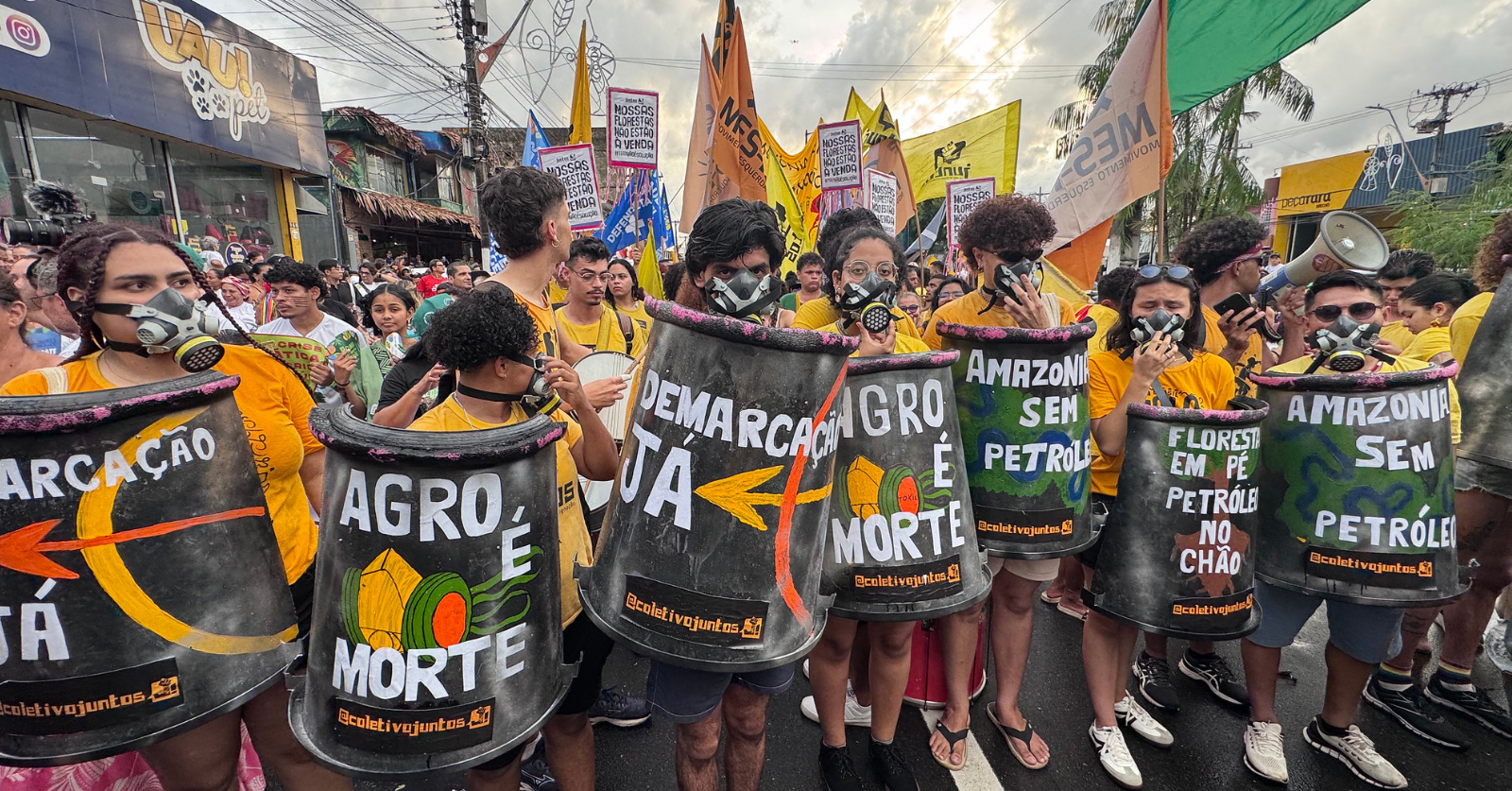
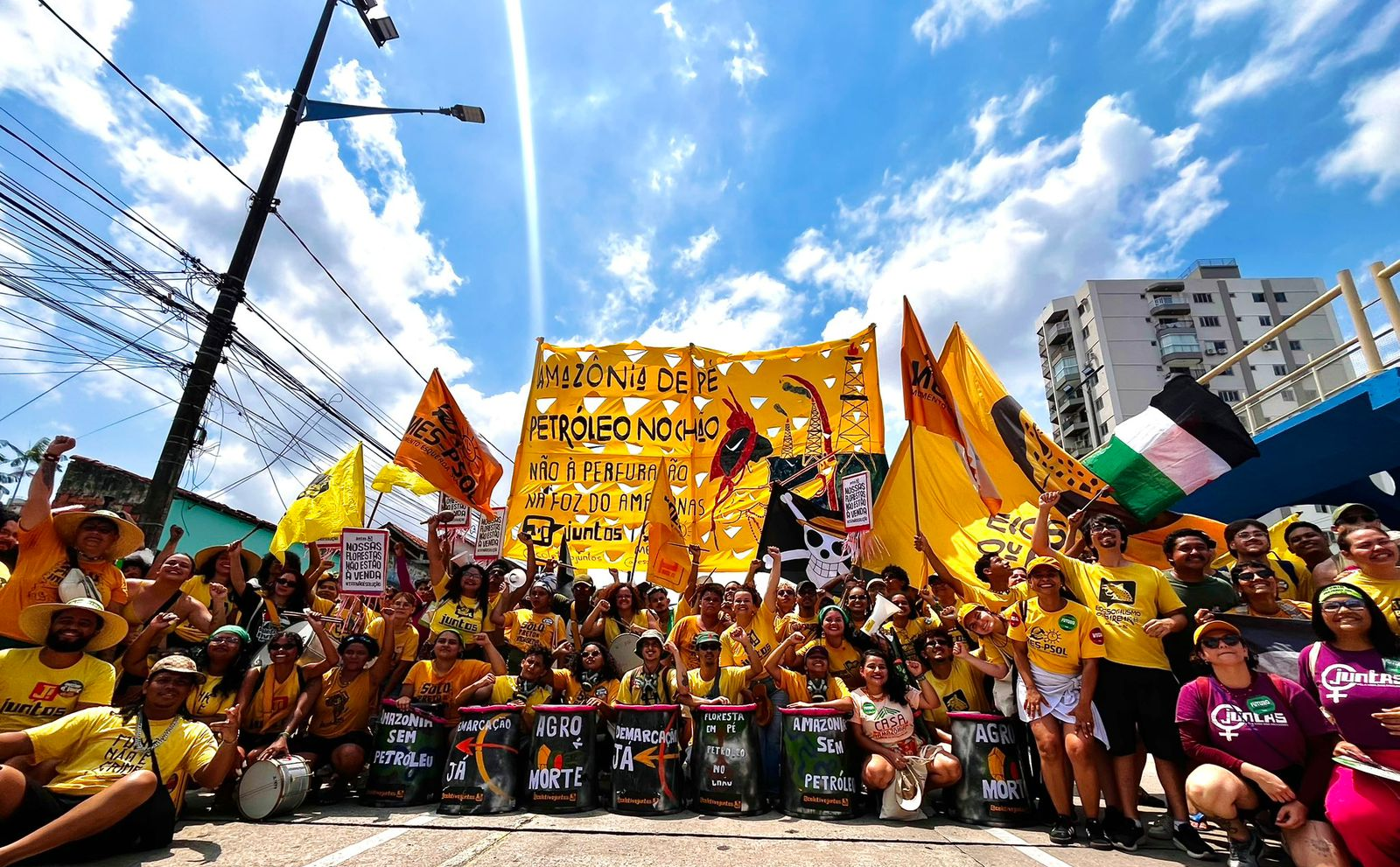
The revolutionary wing took a more confrontational approach. On the first day of the COP30, the Indigenous Peoples of the Lower Tapajós and Juntos! set an example for what it means to confront this crisis. (Juntos! is a youth collective affiliated with MES-PSOL, Movimiento Esquerda Socialista, a tendency of the Partido Socialismo e Liberdade.) They occupied the COP30 conference to protest the false solutions being presented and the numerous concessions that Brazil’s center-left government has made to petrol companies to expand oil drilling and mining in the Amazon. This confrontation set the tone for the rest of the conference, as well as the Cúpula dos Povos. Throughout the Cúpula, Juntos! made strategic interventions to raise the profile of their ecosocialist vision and draw attention to the hypocrisy of Lula’s extractivist policies. I attended one of the discussions on false solutions. When I looked around, Juntos! activists were all dressed in yellow, actively engaged in discussion, and making different points, all emphasizing the need for a real political alternative. The discussions at the Cúpula produced a radical final declaration, clearly naming capitalism as the cause of the climate crisis, and proposing popular solutions such as demilitarization, reparations for the destruction caused by extractivism, a just transition, and strengthening international solidarity.
Tackling the Climate Crisis
Taking on the climate crisis is an existential imperative. Climate change is not an issue that can be resolved in one country. It requires an international united front for ecosocialism. We can’t compartmentalize climate action as a distinct advocacy issue, disconnected from other struggles. An ecosocialist perspective must inform our organizing across the board. For example, weapons manufacturers are some of the largest emitters in the world, accounting for more than 5% of global emissions. Climate struggle must also be anti-imperialist to meaningfully account for these emissions. Additionally, the climate crisis will increase global tensions over limited resources, worsen gender inequality, and increase class disparities.
On the US left, there is a tendency to frame ecosocialism as austere or difficult to buy into. The alternative often proposed is the Green New Deal, which has failed to advance in the Senate or mobilize a mass movement. At best, the Green New Deal represents a piecemeal reform that will only be effective in the short term. It fails to acknowledge how imperialism can be weaponized for the sake of “green” technological advancement in the Global North, ultimately failing the environment and workers everywhere. It is possible that even a partial reform like the Green New Deal could buy us time until a more comprehensive solution can be realized. However, for that to be a possibility, there needs to be more bottom-up pressure by working-class people for meaningful climate action.
To build a mass movement capable of confronting the climate crisis, we need two things: a comprehensive grassroots struggle across all sectors and an ambitious expansion of the welfare state to facilitate a just transition. One example we can learn from is the Ecosocialist Manifesto published by the Fourth International in February. The manifesto frames the politics of the issue clearly and begins to chart a transitional program for the struggle. The program is far-reaching, calling for a mass expansion of public resources, such as healthcare and transportation, alongside a reduction of total emissions, while maintaining a staunch opposition to imperialism and extractivism. This program can help guide our interventions in the student movement, the labor movement, feminist movements, anti-racist movements, and so much more. For example, we can organize our communities to fight against the construction of data centers or detention camps like Alligator Alcatraz as part of an ecosocialist struggle.
Addressing the climate crisis does raise some contradictions, particularly in the energy sector, where moving away from fossil fuels could mean the loss of jobs that workers and communities rely on. We need to use our electoral program to agitate for the betterment of workers’ lives by fighting for non-workplace-specific issues, like a jobs guarantee, universal healthcare, free education, and a wholesale transformation of our economy away from extractivist sectors to ones that guarantee our quality of life and the survival of our planet.
Climate disasters are getting worse. From the Caribbean to the US, hurricanes devastate thousands. Wildfires are becoming more prevalent, even in rainforests like the Amazon, displacing many. Data centers deprive communities of clean drinking water. Young people have had our futures sold out in favor of shareholder profits we’ll never benefit from. The only path forward is to address the crisis at the root and put forward a positive vision for ecosocialism. Accepting meager concessions or closed-door negotiations with capital is not enough to resolve this crisis. We need a strong ecosocialist vision and a confrontational strategy that challenges billionaires, the far right, and neoliberalism. The occupation of COP30 was only the first step. It’s on us to build a mass movement.