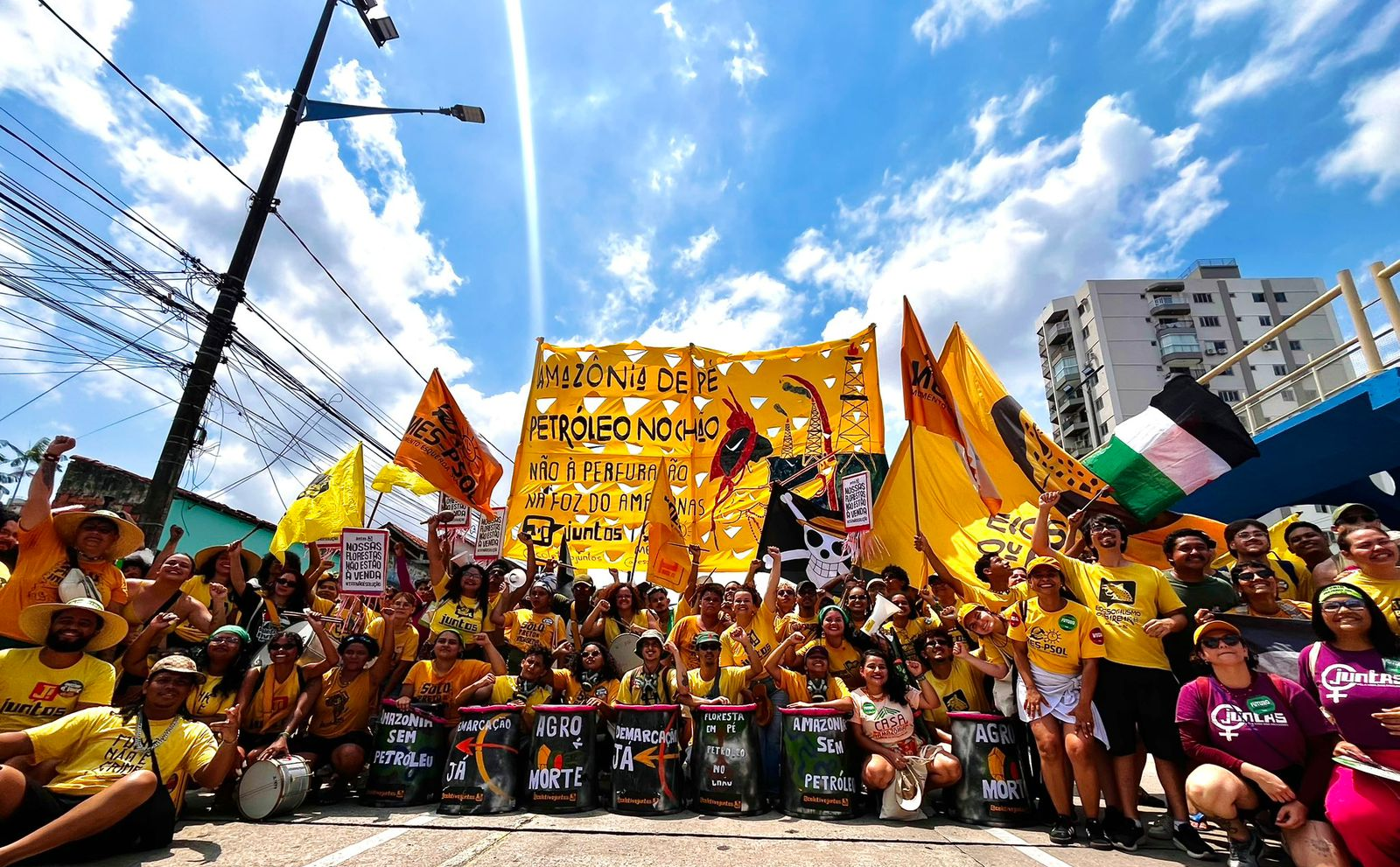

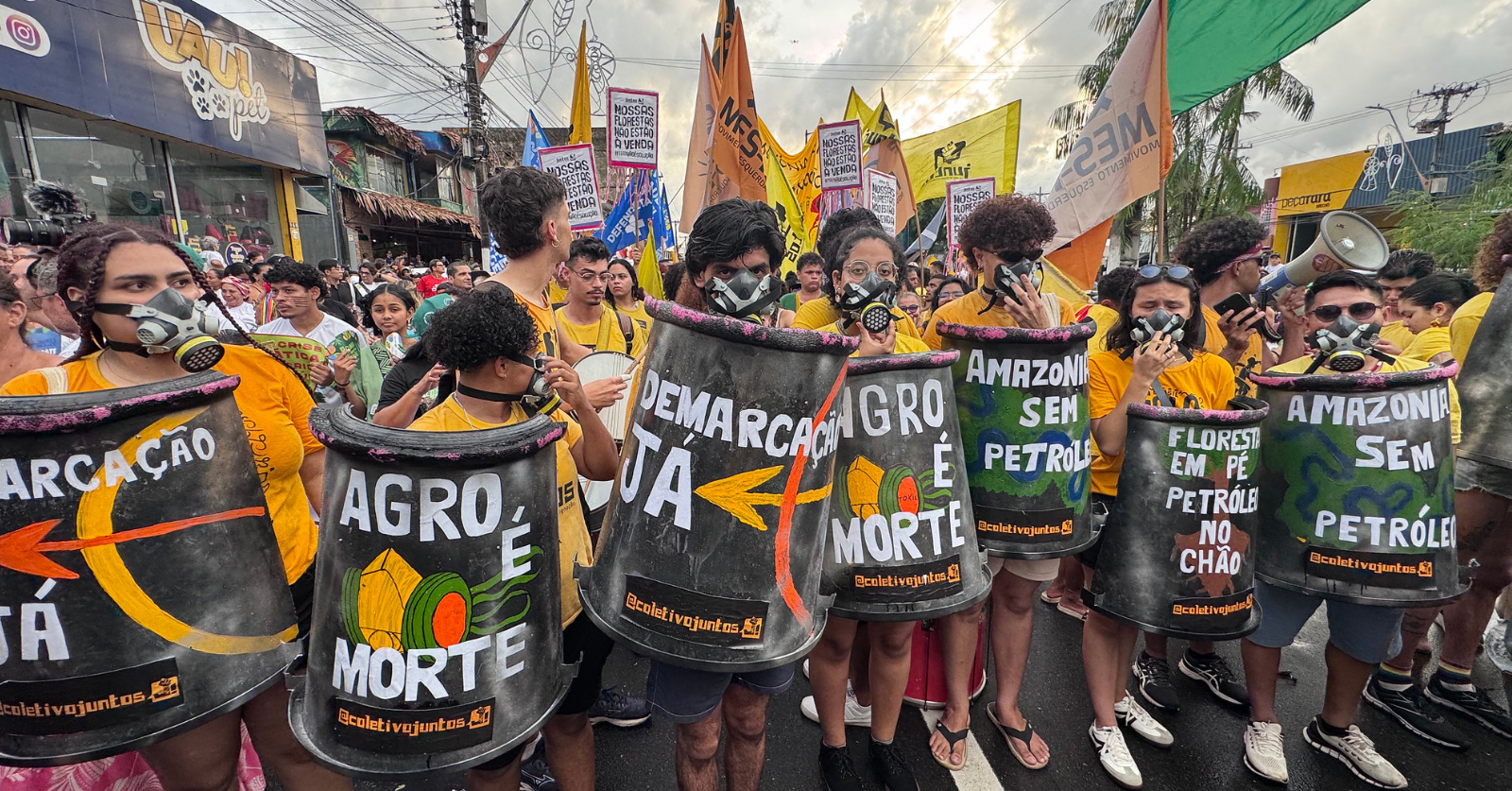
On January 22, 2026, in the city of Santarém in Brazil, more than one thousand Indigenous people occupied the port terminal operated by the company Cargill. For an entire month, they faced pressure from multiple fronts: smear campaigns driven by agribusiness, a blackout by the mainstream media, indifference from the federal government, and a judicial offensive that went so far as to order the forced evacuation of the site (which ultimately did not occur).
The reason for the protest was clear. Indigenous communities were demanding the repeal of Decree 12,600/25, signed by President Lula in August 2025. The decree authorized the privatization of sections of inland waterways along the Tapajós, Madeira, and Tocantins rivers in the Amazon region. Privatization would allow private companies to control river access and logistics infrastructure, impose user fees, and prioritize export-oriented traffic, while promoting infrastructure interventions designed to maximize navigability and profits, often at the cost of environmental degradation and Indigenous ways of life. The measure favored agribusiness and multinational corporations (such as the U.S.-based Cargill) at the expense of the environment and Indigenous people.
Despite the enormous difficulties they faced, the Indigenous movement prevailed on February 23. Cornered by the mobilization — and by the massive national solidarity and public attention it generated — President Lula revoked Decree 12,600/25. Emotional scenes of popular celebration in Santarém quickly spread across social media.
Lessons from the Struggle of Indigenous Peoples
As a popular victory, the mobilization of Brazil’s Indigenous peoples carries important lessons and marks the opening of the 2026 political calendar in the largest country in Latin America.
The most basic lesson is that it is possible to mobilize — and to win. This seemingly simple truth reemerges every time popular sectors take to the streets around the world. The same can be said, for instance, of the inspiring mobilization of the people of Minneapolis to expel ICE from the city. (Coincidentally, Cargill is headquartered in Minnesota.)
In Brazil’s case, the lesson goes further. The struggle demonstrated the importance of political independence for social movements vis-à-vis a government that is, in theory, “progressive.” The architect of the ill-fated decree was the Lula administration itself, acting in alliance with agribusiness. Throughout the mobilization, the government repeatedly attempted to ignore or demobilize the occupation, and postponed making any concessions. When the repeal finally occurred, it was because Indigenous movements refused to retreat. They rejected any intermediate compromise or delaying tactics that did not include full revocation of the river privatization decree. And they won.
The Indigenous mobilization also showed — not only to Brazil, but to the world — that economic and environmental struggles are increasingly intertwined and challenge capitalist interests head-on. For those who advocate an ecosocialist strategy for Brazil and globally, this struggle offers an inspiring demonstration that ecosocialism must and can be rooted in real confrontations, not abstract aspirations.
Finally, the victorious mobilization offers lessons about the economic project Brazil must embrace and the political fights ahead to build it. The strength of Brazil’s far right rests, on one hand, on a corrupt, oligarchic, and unequal political system that lays the groundwork for figures such as Jair Bolsonaro. At the same time, neofascism gains strength through the advance of neoliberal economic destruction, which drives deindustrialization, reinforces a return to raw-material exports as a central economic activity, deepens dependence on foreign powers, and worsens the material living conditions of the social majority. Agribusiness is part of the far right’s political base and major sectors of agribusiness supported the attempted coup by Bolsonaro and his supporters in 2023. When Lula tries to make compromises with this sector — rather than strengthening a new path of sovereignty and development — he ends up reinforcing, not weakening, his electoral and political adversaries.
The Fights Ahead
The year now opening in Brazil promises to be a challenging one. Other mobilizations are underway alongside the Indigenous-led struggle.
Women have taken to the streets against horrific cases of femicide. Young people are organizing themselves to fight for their universities, which are themselves victims of the government’s neoliberal economic policies that restrict public funding. Teachers are mobilizing for higher wages and better working conditions. Private-sector workers — especially young and Black workers — are intensifying their fight to abolish the “6×1 work schedule,” which forces tens of millions of Brazilians to work six consecutive days followed by a single day off (and not necessarily on a weekend). And across the board, social movements remain on alert against the risk that Congress will give Bolsonaro (currently imprisoned) and his allies amnesty.
This is also an election year in Brazil. Once again Lula, now 80 years old, will run for reelection. He is for now the frontrunner, but his victory is not assured and the final result will likely be very close. Jair Bolsonaro’s eldest son, Flávio Bolsonaro, will be his main opponent, and he already shows significant strength in opinion polls. Beyond the presidential race new governors, senators, and members of Congress will be elected in every state. Once again, the central task of the left and progressive forces will be to defeat the far right.
Brazil’s elections will also attract the interest of U.S. imperialism. For Donald Trump, a return of the far right to power in Brazil would be strategic, and would boost his effort to revive the Monroe Doctrine. It seems probable that attempts at direct or indirect interference in support of the Bolsonaro family will occur. This is likely despite Lula’s recent efforts to repair bilateral relations with the United States, including softening his earlier, sharper criticisms of Trump.
Given the gravity of the political moment, PSOL (the Socialism and Freedom Party), as in 2022, will support Lula, viewing him as a bulwark against the far right and his victory as a necessary condition for protecting the space and rights of social movements and workers to continue organizing.
This decision, however, is not without internal controversy. A minority within the party recently suggested that PSOL go beyond electoral support and form a formal “federation” with Lula’s Workers’ Party (PT). Under Brazil’s political system, a federation is a permanent alliance that amounts to a near-merger between parties.
On the other hand, the majority position — supported by a number of tendencies including the Socialist Left Movement (MES) — opposed this plan. Winning over 75% of the votes in a recent national leadership meeting, this position recognizes the importance of unity in action (including electoral unity) against neofascism, while insisting that preserving PSOL’s autonomy is crucial for the future of a socialist strategy. Today, PSOL is the main explicitly anti-capitalist political party in Brazil, though it is smaller than the PT within the broader left.
The next big moment in Brazil comes at the end of March. Between March 26 and 29, Brazil will host the First International Antifascist Conference for the Sovereignty of Peoples, in Porto Alegre. This broad initiative, convened by multiple parties (including PSOL and the PT), social movements (including the Landless Workers’ Movement, MST), unions, activists, and intellectuals, seeks to fill the gap in international efforts to confront the far right.
Inspired by the victorious struggle of Indigenous peoples, Brazilian socialist activists are preparing for a 2026 marked by many battles. The greatest of them will be to defeat neofascism at the ballot box. Alongside this, they aim to strengthen street mobilizations and build an independent, combative, ecosocialist political pole, one that fights for a radically different future, grounded in democracy, emancipation, and dignity for all workers.