

Congress is about to boast more socialists than ever before. DSA seems poised to double or triple our Congressional slate in 2028 and 2030, but we actually say very little about what our federal representatives are supposed to do with their positions.
Most of the discussion around our Socialists in Office, at all levels, is about passing legislation, but we need to acknowledge that right now we don’t even have the numbers or the organization to stop the priorities of our enemies in both parties, like tax cuts or more oil drilling, let alone to enact Medicare for All.
We of course want to win non-reformist reforms to weaken capital and boost workers’ ability to fight. But to get there, we’ll need to go through a phase of growth, experimentation, and probably getting our asses kicked a bit.
Getting through – and getting the most out of – this phase is complicated even more by the fact that we live in the age of lobbyism. Most legislation in this country is passed exclusively through backroom deals.
When we talk about lobbyists, most people think of AIPAC, conservative think tanks, tech giants, or crypto, but lobbying is also the primary method of doing politics for our progressive allies like NGOs and establishment-friendly union leaders. This means, unfortunately, that some of our candidates’ backgrounds are just in this kind of obscure political work.
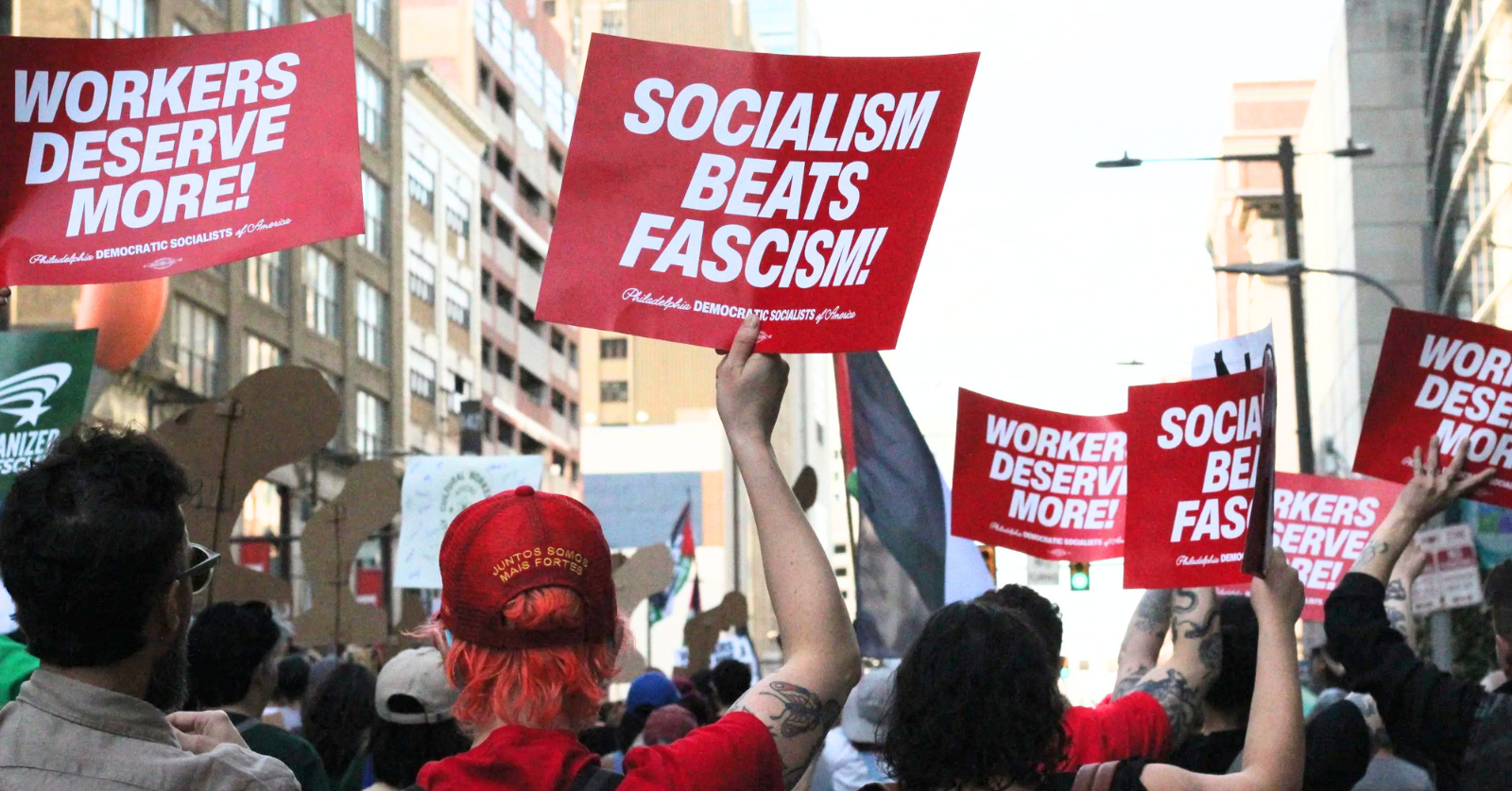
Nowhere is lobbyism more concentrated and more rancid than in Congress. We believe that mass action by millions of working-class people organizing together, not handshakes in smoke-filled rooms, is the right path for the democratic road to socialism. We don’t think socialism can be enacted from above. A different theory of change requires a different mode of politics, not a better business as usual.
To demonstrate this mass action politics, our politicians – particularly our Federal Socialists in Office – need to build the socialist movement: agitate for our demands and grow our base by involving more working-class people in political struggle. Here are five things that Federal Socialists can do:
1. Stick Together
The quickest way to get crushed as a Socialist in Office (SIO) is to try to go it alone. Our SIOs are constantly inundated by proponents of lobbyism, which would mean spending less and less time with working-class people or socialist cadre. Each socialist elected who gets picked off by establishment Democrats will weaken these connections further until they’re isolated from the movements and organizers who gave them their office. No base, no mass movement.
The best antidote is to stick together with fellow FSIOs in a Socialist Caucus. Caucusing together will let us move in unison, develop clear political lines so we don’t have to approach each crisis from square one, and help DSA become even more party-like.
This means that when a DSA member runs for Congress, all our Socialist Caucus members of the House endorse that candidate, and the candidate uses our lists to fundraise and phonebank. We’ll have to combine the capacity of our comrades’ offices, their bases of support, and DSA both locally and nationally to compete with the lobbyists’ money and influence.
2. Make Enemies
When a comrade occupies an elected office, they’re organizing in a parallel reality to the vast majority of people in the world. This new reality can be politically disorienting, which suits the lobbyists just fine. But allies outside won’t understand the daily reality of navigating the halls of power, which can start a vicious cycle of distrust and miscommunication within movements.
In order to survive the lobbyists’ world, our Socialist Caucus should make our hatred of them clear; that goes doubly for our socialists’ “colleagues” who attack us on behalf of their donors. When lobbyists come for them, we should respond publicly. When billionaire-bought politicians come for them, we should tell everyone. We should take pride in naming our enemies. It’s good not to get invited to the Christmas party when the party is made up of weapons manufacturers and pedophiles!
Our mass politics are a threat to the lobbyists’ careers. They will tell us that we won’t get anywhere by alienating them. They’ll try to block our priorities, spend millions supporting our opponents, and try to poison the bonds between us and our constituents. We can’t control everything our enemies do, and they’re weaker than we know. We can only double down on mass action and build our movement until the lobbyists are marginalized.
JP Lyninger was elected to the Louisville, Kentucky, city council in late 2024. He says, “When anyone takes office, they’re swarmed by people who are asking if you can be bought, bullied, or used, or some combination of the three. Whether the lobbyists represent business interests or nonprofit coalitions looking for financial and policy support, they’re professionals whose job is to steer the agenda of government.
“Being transparent about these interactions and working with my chapter, Louisville DSA, to take these power dynamics out from behind closed doors and into public awareness is vital for our organizing and for the long-term political education of the working class. If we aren’t arming working people with this knowledge, how can they be political protagonists?”
3. Touch Grass
It’s something of a joke in American politics how much time Congresspeople spend in Washington and how little they return to their home districts. But we’re doing mass action, which means constantly going back home to uplift the working-class people of our FSIOs’ districts. We can hold town halls on widely and deeply felt issues attached to our Socialist Caucus’s program, join local movement efforts that connect with DSA’s national campaigns, and use our combined lists and influence to grow the movement outside of Washington.
We’re in a moment where we’re massively expanding the “supporter” ring of our movement’s “bullseye,” but we should make no mistake: an electorate is not a base. As Eugene Debs put it, “Voting for socialism is not socialism any more than a menu is a meal.” We need to focus on moving new supporters into the activist ring by plugging them into concrete organizing asks and local DSA chapters. We should seek funding in national budgets for projects that can build our base back home, especially when they’re tied to the demands of socialists and social movements. The Belgian Workers’ Party took state money and built party health clinics in order to organize a base of support. Our FSIOs should also campaign for socialist candidates in their home districts who emerge from DSA and social movements.
4. Put Our Issues on the Table
Right now, socialists are an extreme minority in Congress, meaning we don’t have much hope of immediately passing the non-reformist reforms we need to weaken capital and grow the working class’s ability to fight. That doesn’t mean we can’t have a big impact on the U.S. political landscape and discourse — we can still put issues on the table. Even if we don’t think a bill can pass, the Socialist Caucus should introduce legislation that majorities of Americans support and use these moments as an educational and organizing opportunity.
Long-shot bills like Bernie’s Medicare for All Act or the Block the Bombs Act give something tangible for social movements to organize around and let us challenge other electeds to sign on. If they refuse, we can use their refusal to run socialists against them next cycle. Even when a bill doesn’t pass, it helps us gauge the strength of our movement and our capacity for public pressure. It also lets us direct the media towards our demands and away from whatever bullshit the corporate parties want working people focused on instead.
5. Make a Scene
Our FSIOs are some of the most highly visible members of our movement. That visibility means they can help our message reach beyond our normal activist base into the broader working class. Likewise, they more than anyone will help shape the public’s conception of socialism. If they don’t define socialism for millions of Americans, our enemies will.
The best way to use the bully pulpit is to get in the news constantly in a way that can’t be ignored. Think AOC occupying Nancy Pelosi’s office along with the Sunrise Movement, Rashida’s sign during Netanyahu’s speech, and Bernie’s legendary filibuster.
The Socialist Caucus should write a good stump speech for socialism, making it clear that we’re not just referring to libraries and fire protection, and have our members give it at every single opportunity. We should clip speeches and actions and share them on social media. Our FSIOs should be in constant communication with the public; former Mexican President Andrés Manuel López Obrador’s’s daily morning press conferences and Zohran’s slew of short-form videos are good examples. Our electeds should make video interviews with working-class people in their districts, showing the realities of their daily lives and how our platform can change their lives for the better.
Entering a government made by and for capitalists is one of the toughest things we can ask a comrade to do. When we stick together, we can resist the siren song of lobbyism (and have a good time doing it).