
“If our imagination dies, our organization is nothing.” — Ramsin Canon
DSA is running and winning electoral campaigns across the country. Our victories are making headlines and putting our movement in the national spotlight. It’s tempting to chase another high-profile win. But we have to ask ourselves: What are we building toward?
Councilmember Nithya Raman (Council District 4) was first endorsed by DSA-LA in 2020. In our chapter, an endorsement commits resources to canvassing, phone banking, research, social media, and more. Raman’s city council tenure has seen some notable wins: She led efforts to reform the city’s Rent Stabilization Ordinance, she introduced a Tenant Anti-Harassment Ordinance in 2021 (and led efforts to strengthen it in 2024), and in 2023 she voted against the police union contract.
Simultaneously, the political climate has shifted massively since Raman first took office. Open socialists have won races at the city, state, and federal levels, with many voters citing affordability, concern over ICE, and the United States’ role in Israel’s genocide of Palestinians. In light of this, Raman’s missteps in office are especially notable. She chose to seek and accept the endorsement of Democrats for Israel-Los Angeles (DFI-LA), a move that led our chapter to censure her. She also drew our expression of disapproval when she voted to approve Police Department Chief Jim McDonnell, who has a record of collaborating with ICE.
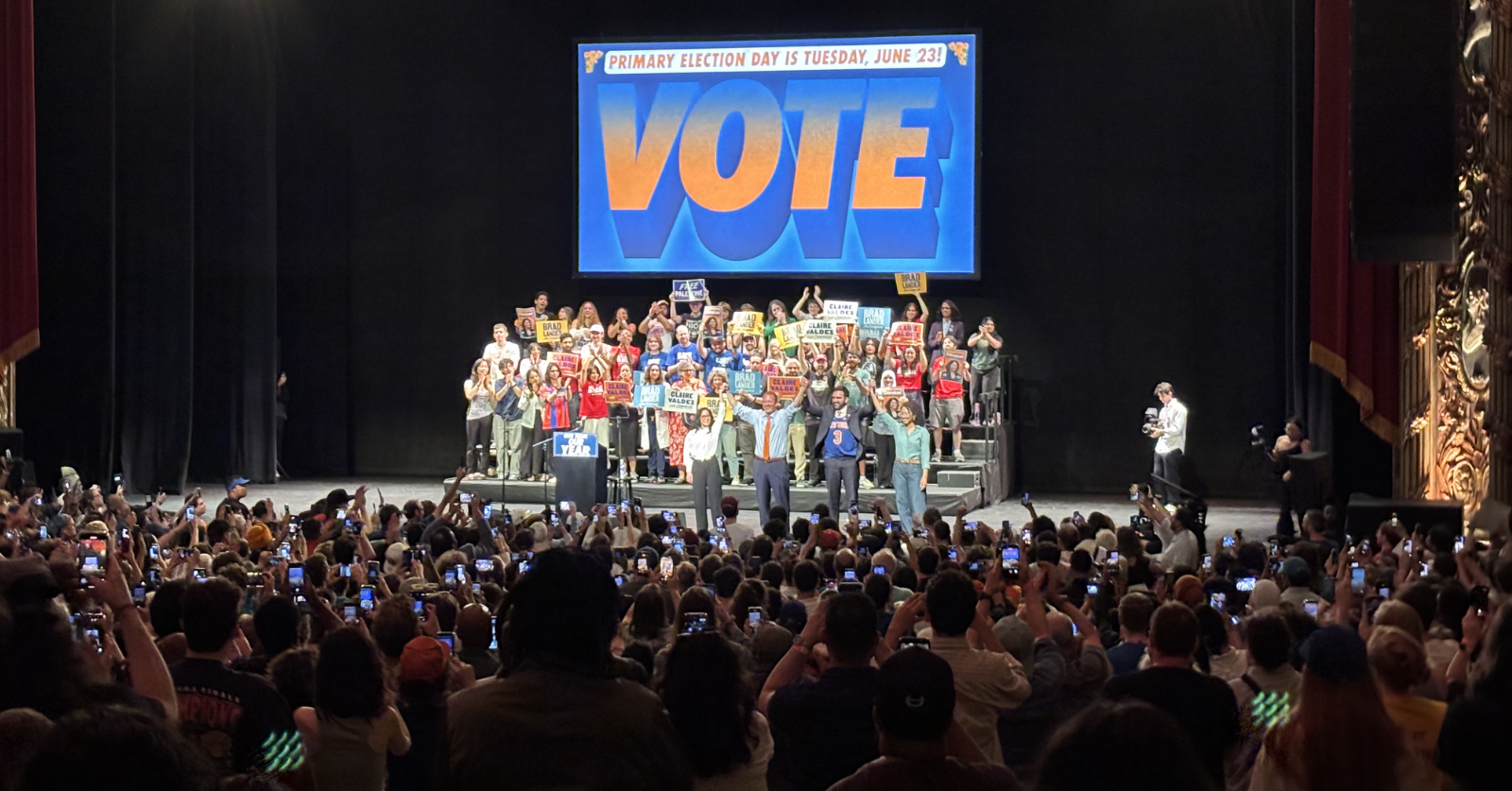
DSA-LA made a conscious decision not to endorse any mayoral candidate in the June primary. Raman entered the race at the last minute, and our chapter chose not to reopen the endorsement process. When we polled our members on their support for the two DSA-LA members in the race, the results showed a split between Rae Huang and Raman. Despite this, the Electoral Politics committee recommended Raman in our voter guide.
On August 19 and 22, DSA-LA held candidate forums, and starting August 26 will decide whether to endorse Raman. If socialists want to build lasting power and run the kind of candidates Los Angeles truly deserves, we believe this endorsement must be voted down. We have two major objections to a Raman endorsement: she does not meet our criteria for a class struggle candidate, and her liberal theory of political change is at odds with DSA’s.
Raman Is Not a Class Struggle Candidate
A class struggle candidate is someone who—in their campaign and in office—sees themselves as an organizer first and a legislator second. They understand that the working class is the protagonist in the fight against capitalism, they agitate against the capitalist class, and they work to popularize socialism. Our Bread & Roses comrades in “What Are Class Struggle Elections?” define four criteria that “class-struggle candidates” should meet:
1. Openly identify as socialists.
2. Through their election campaigns, and once in office, see mobilizing and fighting alongside working-class people as one of their primary responsibilities: They will use their public profile to popularize a class-struggle perspective, one that sees the working class as the agents of change and capitalists and capitalist politicians as the main barrier to change.
3. Actively and explicitly oppose racial, national, gender, and other forms of oppression and discrimination and repudiate support from oppressive or bigoted figures.
4. Commit to using their campaigns and elected offices to help build and unite socialist, union, and other working-class organizations and militancy independent of candidates’ campaigns and of the Democratic Party.
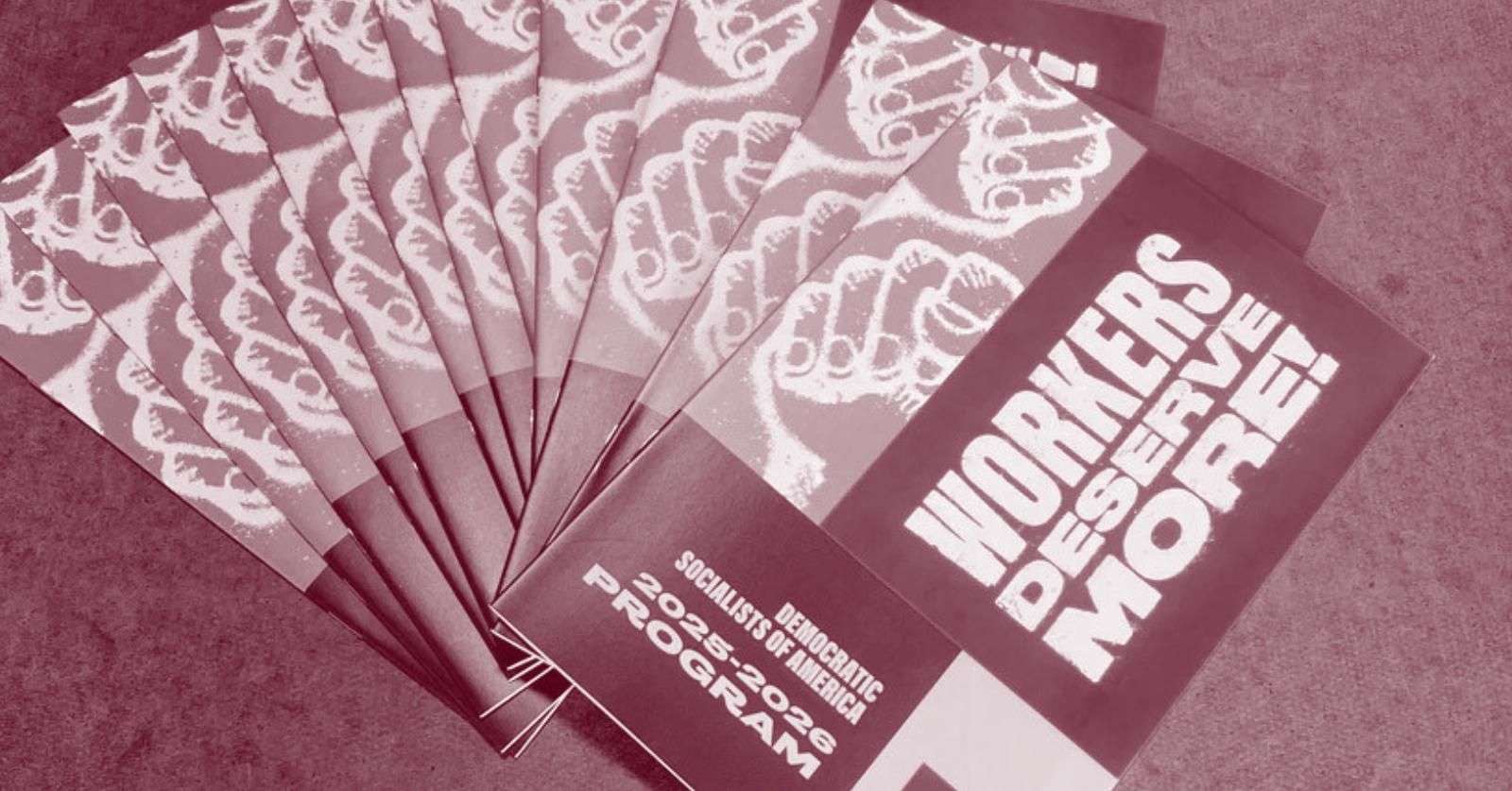
Additionally, we can look to the criteria for our national endorsements, which include having “demonstrated a history of leadership in their chapter,” committing to “…uphold DSA’s national policy platform, Workers Deserve More, and DSA’s national priorities, campaigns and initiatives,” and committing to “grow their DSA chapter and develop DSA leaders through their campaign,” to name just a few.
These criteria are intended to preserve members’ capacity for campaign work and to encourage more meaningful endorsements. This is particularly relevant in LA, where we have 11 other possible candidates for various offices to endorse for the general. In fact, we have already endorsed Marissa Roy for LA city attorney and city council candidate Estuardo Mazariegos, who is advancing to a runoff but struggled against his opponent, Jose Ugarte. Ugarte received 40.62 percent of the primary vote, Mazariegos only 22.31 percent. This race is in a predominantly working-class POC district in South Central LA where DSA-LA has the opportunity to expand its reach. The chapter will need to focus its resources to get Mazariegos over the finish line.
Unfortunately, Raman meets none of the criteria articulated in either Bread & Roses’ or DSA’s guidelines for a class-struggle candidate. Let’s dive into why.
Earlier this year, Raman spoke at The Festival of Progressive Abundance, a conference hosted by groups including YIMBY Democrats for America, Project Liberal, and the Center for New Liberalism. (Other speakers included Jon Lovett of Pod Save America, Jan Sramek, CEO and founder of the billionaire-backed land development group California Forever, and Representatives Scott Peters and Laura Friedman, who have collectively taken over $200,000 from pro-Israel PACs.)
These are the groups that align most closely with Raman: center-left liberals who believe strongly in free-market capitalism. This is at cross purposes with the vision we as socialists have for Los Angeles. We are not seeking just to make a miserable society more tolerable; we want to completely transform it. This starts by offering an alternative, socialist vision of our city, as Zohran Mamdani has done in New York with his pledges to tax the rich, offer universal child care, and transform the city’s housing.
What sets Zohran apart is not just his charisma but his unwavering commitment to the movement. He refused to run unless the local DSA chapter endorsed him – he ran as an open, proud socialist, with a platform that resonated with working-class New Yorkers. In contrast, Raman has distanced herself from comparisons to Mamdani. She told Vanity Fair, “Mamdani is one of the most popular politicians in America right now, and I’m very grateful to be compared to someone who is that skilled as a communicator and a leader. But I am different. I am myself.” This is not something someone dedicated to DSA or the socialist movement says. It is this exact mindset that will have us continuously unable to shift her.
Claims that Raman will inevitably be tied to DSA, so we might as well support her, miss the point: endorsements are an opportunity to further shape a consistent, appealing identity for our organization. Raman herself has repeatedly distanced herself from DSA-LA and rejected identifying as part of a larger movement. She said, “I did not join the DSA because I had a deep ideological drive, but I do really care about issues, and they were the only political organization in LA talking about renters’ rights, the only one.”
Let’s compare Zohran’s and Raman’s platforms, focusing on her biggest issue: housing. In a video on her campaign site, Raman asks the question: “Why is the rent so damn high in Los Angeles?” Her answer: “We have the fewest homes per person of any city in the country.” Her platform reads, “This crisis is almost entirely self-made.” Now, let’s take a look at Zohran’s housing platform in July 2025: “New York City is a majority-tenant town, but too often, our government works for the landlords.” Zohran places the blame on landlords, while Raman blames an ineffectual city government. In fact, Raman’s platform champions so-called “small landlords,” vowing to support them via “robust repair, maintenance, and rehabilitation programs.” This implies that landlords aren’t receiving enough money from tenants – they need assistance from the city, as well.
Digging further, let’s examine their solutions to the housing crisis. Raman says “cut the red tape.” Her background in urban planning and identification with YIMBYism have defined her perspective on housing policy, which identifies for-profit development as the key. This is not DSA’s perspective on housing.
Raman’s attempt to water down Measure ULA (LA’s so-called “mansion tax”) earlier this year placed her on the side of billionaires and developers, and opposite housing advocates and unions, including the teachers union. When asked whether she supports the decommodification of housing as a long-term goal, Raman dodged the question, retreating to arguments that frame LA’s housing problem as logistical, rather than political. Zohran, in comparison, prioritized public housing and putting power back into the hands of tenants. This is a fundamental difference in political analysis.
2028 will be a defining moment for socialists in Los Angeles. With the Olympics coming up, the world’s eyes will be on our city. Major unions, including the hotel workers’ Unite Here Local 11, will be pushing their Fair Games campaign, and many unions have contracts that are set to expire in May 2028. Los Angeles and the mayor will have the international stage and the opportunity to push for international solidarity. Unfortunately, Raman’s position on Israel has never been a simple “fumbling.” The LA chapter has met with her campaign multiple times to help her understand our point of view, but we were still forced to censure her after she sought and accepted endorsement from DFI-LA, refused to support BDS (Boycott, Divestment, and Sanctions), and said explicitly, “Israel has the right to exist,” framing the debate over Palestinian liberation on Israel’s terms. The last thing we should do as our movement gains momentum is endorse a candidate who capitulates to Zionists and rejects our core principles of anti-capitalism and international solidarity.
This is not simply a question of whether Raman is left enough on any single issue. It is a question of what we think a socialist organization is for. If our job is simply to calculate who is the least worst option and back them, we are not a left opposition movement. Instead, we are a group indistinguishable from any other actor in Democratic Party politics. Zohran did not win because he was the safest bet. He won because DSA offered a vision people could organize around. If DSA-LA wants a second Zohran, we have to be willing to build one, not settle for a mirage.
Our Theory Of Change
Our second objection to a Raman endorsement relates to Bread & Roses’ broader theory of political change. For most politicians, even progressives, conventional wisdom is the name of their game: results are delivered by politicians on behalf of constituents – workers are not helping deliver the victories, but delivering their support.
As our comrades in Portland DSA put it in a recent article for The Call:
“Some tendencies in DSA believe that organizing the working class means electing enough democratic socialists to office to reform our governmental policies and build momentum for socialism from the inside.
“As Bread & Roses members, we believe that winning elections in a capitalist society is not the same as taking state power. Our theory of change clearly places an organized working class, primarily organized in the workplace where workers have the most power, as the agents of change…we see the primary role of the elected official once in office as establishing a clear democratic socialist pole in opposition to capitalists and political establishment elected officials.”
In other words, we want our socialist politicians’ activity to facilitate bottom-up worker organizing, not just for immediate wins, but in service of greater fights to come. For example, Mamdani’s office devoted considerable support to already-existing tenant organizing such as the Union of Pinnacle Tenants. This was reminiscent of the Bernie 2020 campaign’s use of voter lists to direct supporters to active picket lines in their area. Socialists who support both Mamdani and Sanders acknowledge they could do more to promote working-class self-activity, but there’s nothing in Raman’s platform or her time on the city council that is remotely similar to these examples.
Seizing the Moment?
Let’s consider some of the affirmative cases being made for a Raman endorsement.
In a recent opinion piece, a group of Raman’s supporters within DSA-LA argues that “her strength as a candidate…is not a fixed variable”; that her campaign and administration can be meaningfully influenced by DSA-LA.
There’s lots of evidence that DSA-LA can help Raman pull off a win. The chapters’ GOTV efforts proved decisive in her city council victories. But that doesn’t mean DSA-LA’s program or long-term objectives will be a priority for Mayor Raman if we back her to the hilt. On the contrary, the most likely outcome is one similar to her city council tenure, albeit much more high-profile: a term fraught not only by the missteps mentioned earlier, but a general lack of engagement with DSA-LA. This mixed track record likely contributed to our chapter’s decision against reopening the endorsement process during the primary.
The urgency of our political moment pervades supporters’ case for a Raman endorsement. Whatever her faults, they argue, the potential gains of a Mayor Raman for the socialist movement are too appealing to resist. But DSA-LA’s “radical reputation” isn’t the only thing at stake. If Mayor Raman finds herself constrained by her office – an executive with considerably less power than in New York, and a mere fraction of its budget – and lacks the willingness to move working-class people into motion, it may not just create bad optics for DSA-LA but weaken the legitimacy of our nationwide movement. The costly failures of insurgent left-populists like Alex Tsipras of Syriza in Greece or Gabriel Boric in Chile, whose movements thrust them into power but lacked the capacity to create durable bottom-up organization, offer an instructive worst-case scenario.
Similarly, Brandon Johnson’s tenure as Chicago mayor has been marked by low approval ratings and budget crises, leaving hopes for a transformation of the city’s affordable housing in tatters. Johnson (who received endorsements from Chicago DSA-backed alderpersons but whom Chicago DSA opted not to endorse) and his coalition have thus far been unable to effectively confront the forces of real estate and finance. If Johnson (a former public school teacher who helped organize Chicago teachers’ famed 2012 strike) and his union-powered coalition have fallen short, there’s no reason to think Raman’s urbanist and YIMBY backers will fare better.
It’s important to capitalize on the moment where possible, of course. But it’s also critical to identify the limits of politicians who seek to associate themselves with our newly energized brand.
Raman’s supporters believe she can be won over through close collaboration with a handful of DSA-LA members. They point to a deeper relationship with our chapter’s Socialists-In-Office (SIO) committee, as well as the hiring of several DSA-LA members to staff positions on her campaign, as evidence. DSA’s SIO committees are important spaces for collaboration, but we don’t believe they can be leveraged to hold SIOs accountable to our politics. This is why we are so encouraged by the victories of Mamdani and Claire Valdez, as well as Bread & Roses members Jake Ephros and Robert Bell, among others: DSA is their political home; they have participated deeply in our organization’s internal politics. As a result, they have a strong sense of what it means to be a socialist. While our wins in the past year are energizing, our movement is still small and faces headwinds on the road to power. These electeds’ personal commitment to the socialist project is the strongest form of accountability we have. Raman is clear that she has no such commitment.
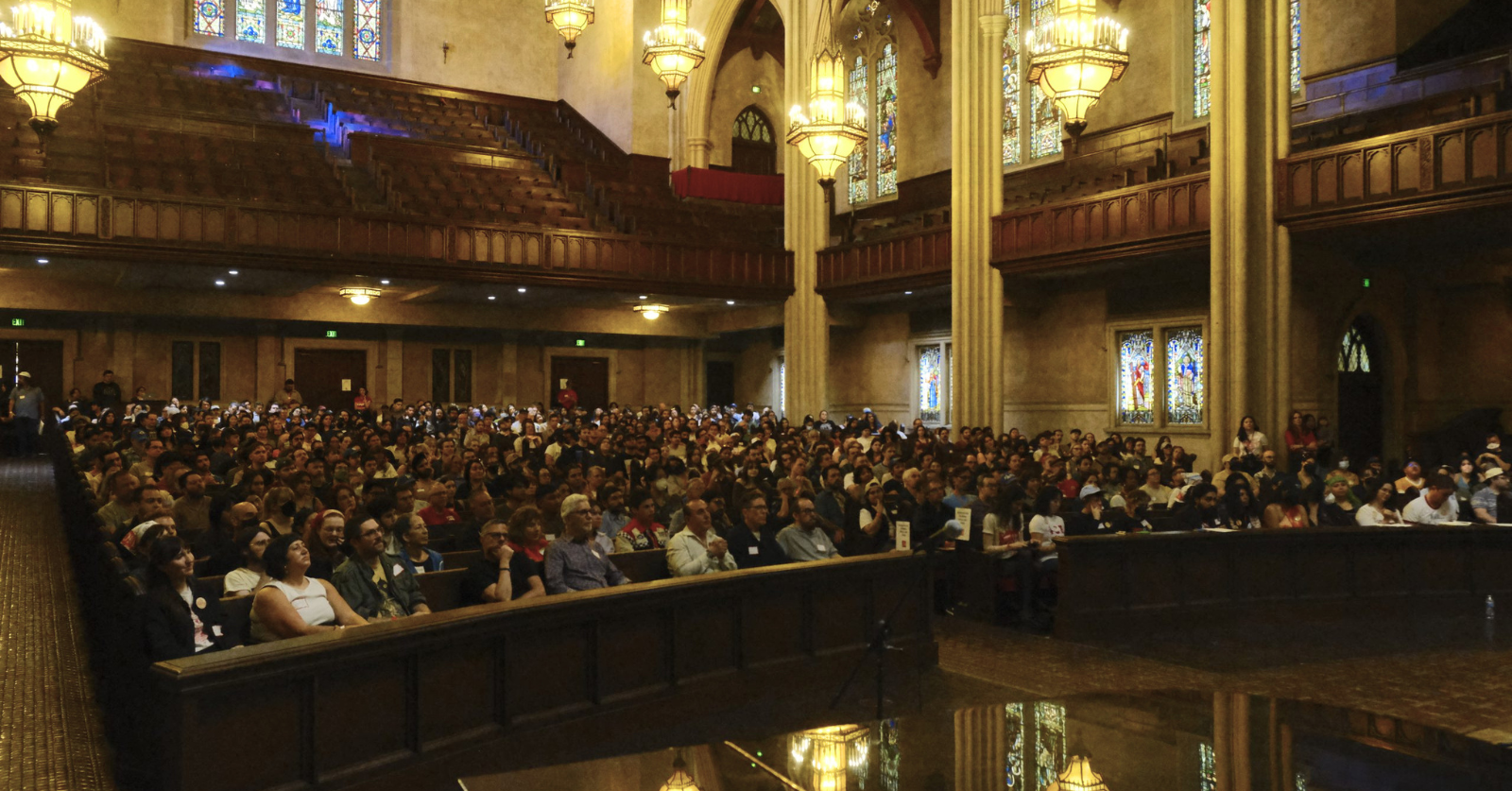
Ultimately, this is why we want to run socialist union members for office instead of placing our hope in politicians who happen to be willing to temporarily align themselves with DSA. At our annual local convention in July, one speaker said, “Our next socialist candidate might be in this room.” We agree. Between the as-yet-unidentified future California congressperson sitting somewhere in a union hall or a DSA chapter meeting, and the group of SIOs and hopefuls who’ve made it through LA’s primary season, we’ve got our hands full. Let’s not lose the forest for the trees.
If you’re a DSA-LA member, please vote NO on endorsing Nithya Raman for Mayor when voting opens August 26.