
Power for workers sometimes feels like an alien concept, something we are not entitled to. This is exactly what our employers want us to believe. But power is not given, it must be taken.
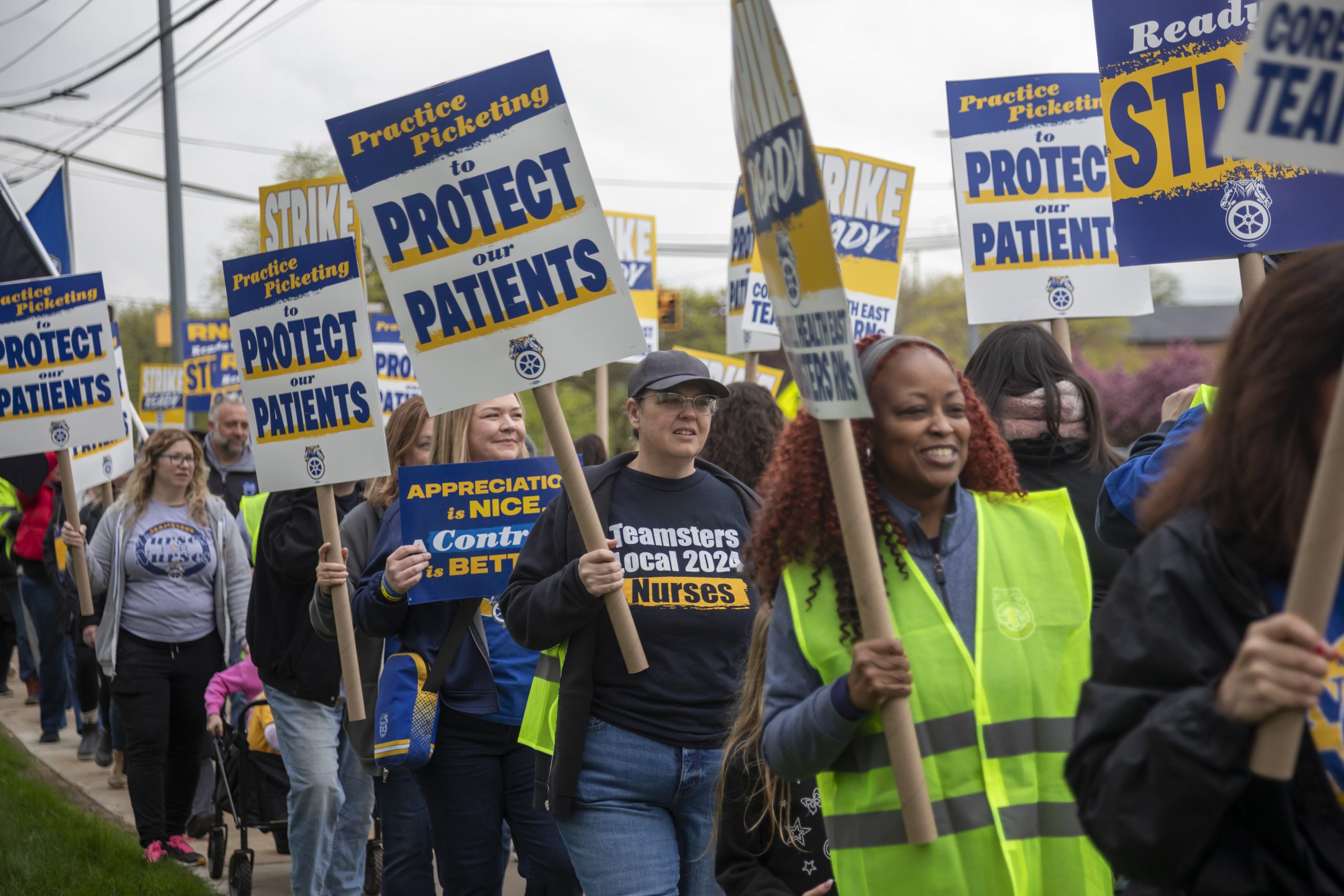
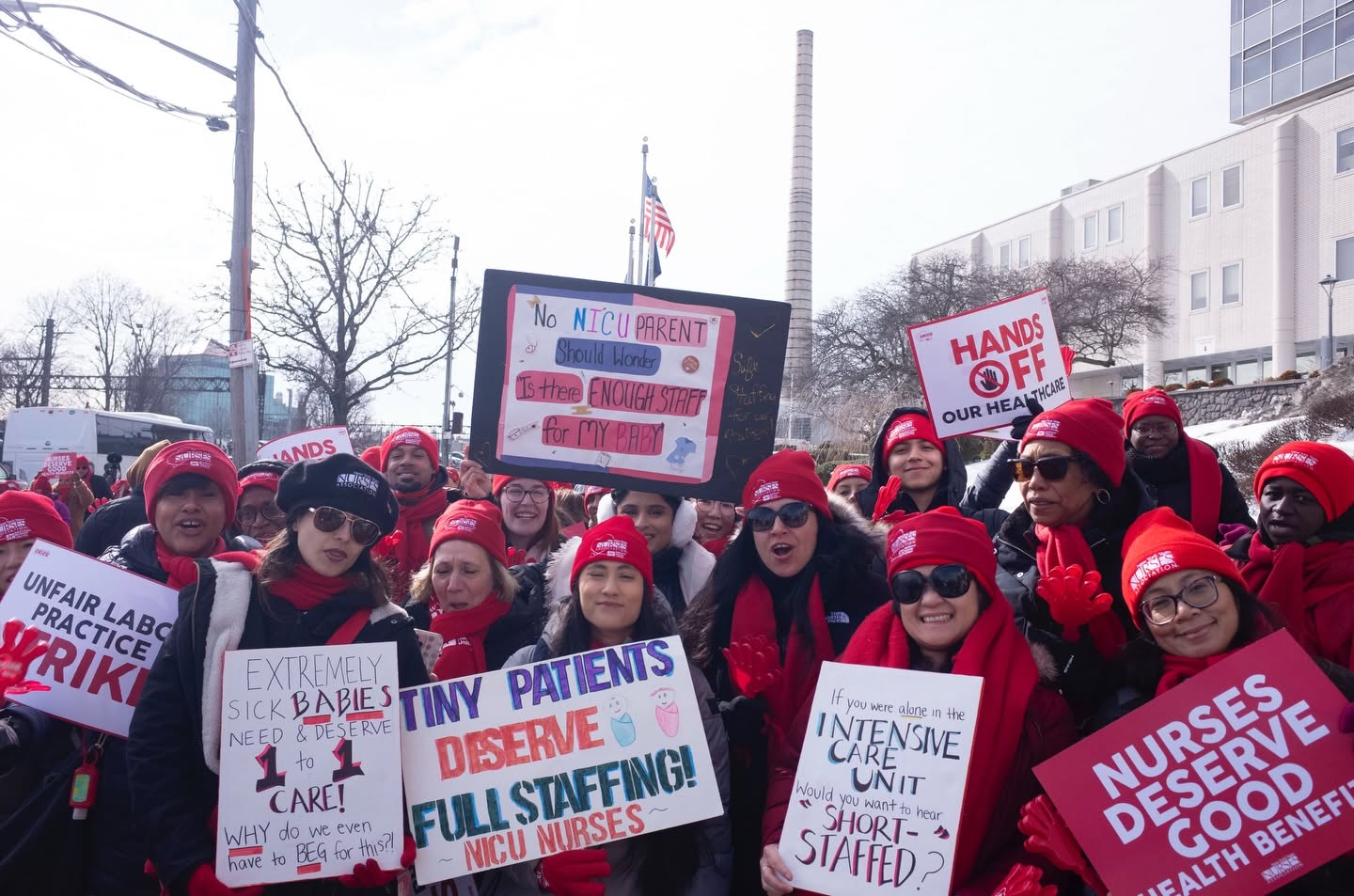
This past January I had the privilege to stand shoulder to shoulder with 17,000 nurses throughout New York City who had made the courageous decision to go out on strike. Our employers — Mt. Sinai, Montefiore, and New York Presbyterian — are some of the richest hospital systems in the country. We were on strike for 40 days.
These hospitals’ business model is to pad their CEOs’ and administrators’ pockets, deliver suboptimal care for some, and provide VIP services for others. The greedy hospital systems prioritize their bottom lines but for nurses, our demands were centered around patients: improving care and safety. Our demands included keeping ICE out of hospitals, not replacing nurses with AI, and protection from workplace violence. But the hospitals had no intention of providing more staffing or implementing better safety.
After four months of bargaining we were at a stalemate. The hospitals wanted to eviscerate our contract and to roll back our historic staffing wins that we had achieved when 7,000 members went on strike in 2023. Our goal was to expand those staffing wins to other hospitals, because they worked! In those hospitals, management was forced to hire thousands of extra nurses, and to pay millions of dollars in fines to the nurses who worked short when their nurse-to-patient ratios were violated.
The hospital conglomerates thought we would fold, but they underestimated the will power of organized nurses. Nurses look death in the face every day and say, “Not today, death.” Nurses are warriors and we were not going to bow at our corporate overlords’ feet.
Strategized for a Year
Myself and other New York State Nurses Association (NYSNA) leaders coordinated and strategized for a year leading up to the strike, even though staff thought they were setting the strategy for us. That coordination continued and grew throughout the negotiations and into the strike, which was a lesson in solidarity across hospitals with different NYSNA contracts.
We organized ourselves around our core priorities of safety and staffing. We signed up leaders to be Contract Action Team members, or CATs. We held monthly, then weekly, and then often daily meetings with our memberships and mobilized, mobilized, mobilized.
Our CATS had tens of thousands of organizing conversations, and our CATS were part of the leadership team deciding on next steps. We cross-pollinated, making sure that the CATS from the different hospitals were in communication; this became known as the CATS Gone Wild group.
As a union, this model of inter-facility communication had never existed, and was often opposed by staff and some top leaders. We built those relationships from the bottom up with the rank and file taking up ownership of the contract fight in ways we couldn’t have dreamed of. Building that structure and those relationships — it took time, effort, trust, and patience, but in the end it was what allowed us to push back on our employers’ and sometimes our union’s efforts to pit us against one another. They underestimated us.
CATS Go Wild
When the union was focused on keeping the elected bargaining committees separated in their various rooms at the tables with the different employers, and was failing to mobilize members into bigger escalation plans to end a strike that was dragging on, the CATS Gone Wild organized a week of action. Hundreds of nurses and community allies marched across the Brooklyn Bridge in a beautiful sea of red. They flooded Times Square on another day. They marched on Kathy Hochul, the governor’s office, yet another day.
The members had been demanding these kinds of actions from our union leadership, especially to bring the fight to the governor’s doorstep. Hochul used repeated emergency orders to pave the way for our struck employers to hire thousands of scabs, betraying our members, as she sought an endorsement from our union at the same time! When the members had finally heard enough excuses as to why we should not escalate, including marching on the governor’s office, the rank and file took the fight into their own hands and coordinated four actions in five days with no help from anyone but ourselves!
A Forced Vote
Shortly after that week of action we began to make inroads at negotiations. Two of the hospital systems, Mt. Sinai and Montefiore, negotiated tentative agreements. As a group we hoped that strategically settling at Montefiore and Sinai would force New York Presbyterian (NYP) to bargain a fair contract. Of all our employers NYP is the richest but had been the most stubborn of the three systems. We as a rank and file stood with Presby nurses and were ready to continue to help them fight their employer in every way possible, but a day after the settlements at Sinai and Monte our union leadership circumvented the NYP bargaining committee, who had decided to keep bargaining, by forcing a ratification vote. It was an ugly move by the union leadership that caused a lot of tension and frustration for members at NYP.
So the rank-and-file nurses marched on the union leaders’ office. In a resounding and successful vote No, the members showed the union leadership that they would continue to strike until they negotiated a contract they were satisfied with. Within a week the NYP nurses were able to sign their own tentative agreement and won job protection language and staffing increases that the employer had previously denied.
Our nurses were out on strike without pay for 40 days, during the coldest winter we’ve seen for a long time. That time was filled with highs and lows. There was sadness and anger, there was joy and pride. Nurses knew that they were doing the right thing, that they would not sit idly by as these corporations attempted to take away our hard-fought gains.
Bread & Roses on the Line
Seventeen thousand nurses, mostly black and brown women, stood strong against bloodthirsty rich companies – with billions stockpiled in hedge funds and multi-million-dollar salaries for CEOs – who put profits over patients every single day. This is Trump’s billionaire-led America and we fought back and survived. We did not make the kind of historic gains we won in 2023, but all 17,000 of us were not broken, either.
Our strike brought us together. On the strike line nurses did what we do best: we cared for each other. Nurses, their families, and their communities joined us on the picket lines. One of the greatest parts of diversity was all the different foods to be had at our strike lines. We had dance performances from our Indian sisters and brothers, we had reggae, soca, reggaeton, and some of the hottest DJ’s in New York.
We invited other unions to march with us, we grew our leadership layers in the hospitals, we raised tens of thousands of dollars for each other, we discovered social media experts among our members, all through our rank-and-file-led efforts. Most important, we held each other up that month with bread, but also with roses. We embodied the spirit of solidarity forever…for “the union makes us strong!”