
The 2018 Democratic primary season gave us the Squad. For the first time in many years, a group of young left-wing insurgents – Alexandria Ocasio-Cortez (AOC), Ilhan Omar, Rashida Tlaib, and Ayanna Pressley – entered into the 116th Congressional Session as an alternative to the corporate status quo. Only two of these freshmen, AOC and Tlaib, were backed by DSA, and overall, the Squad’s shared politics did not translate to a disciplined congressional bloc formally tied to and closely coordinated with mass movement outside of congress. Similarly, DSA and our electoral work was not sufficiently developed to provide the scaffolding necessary for this momentous task.
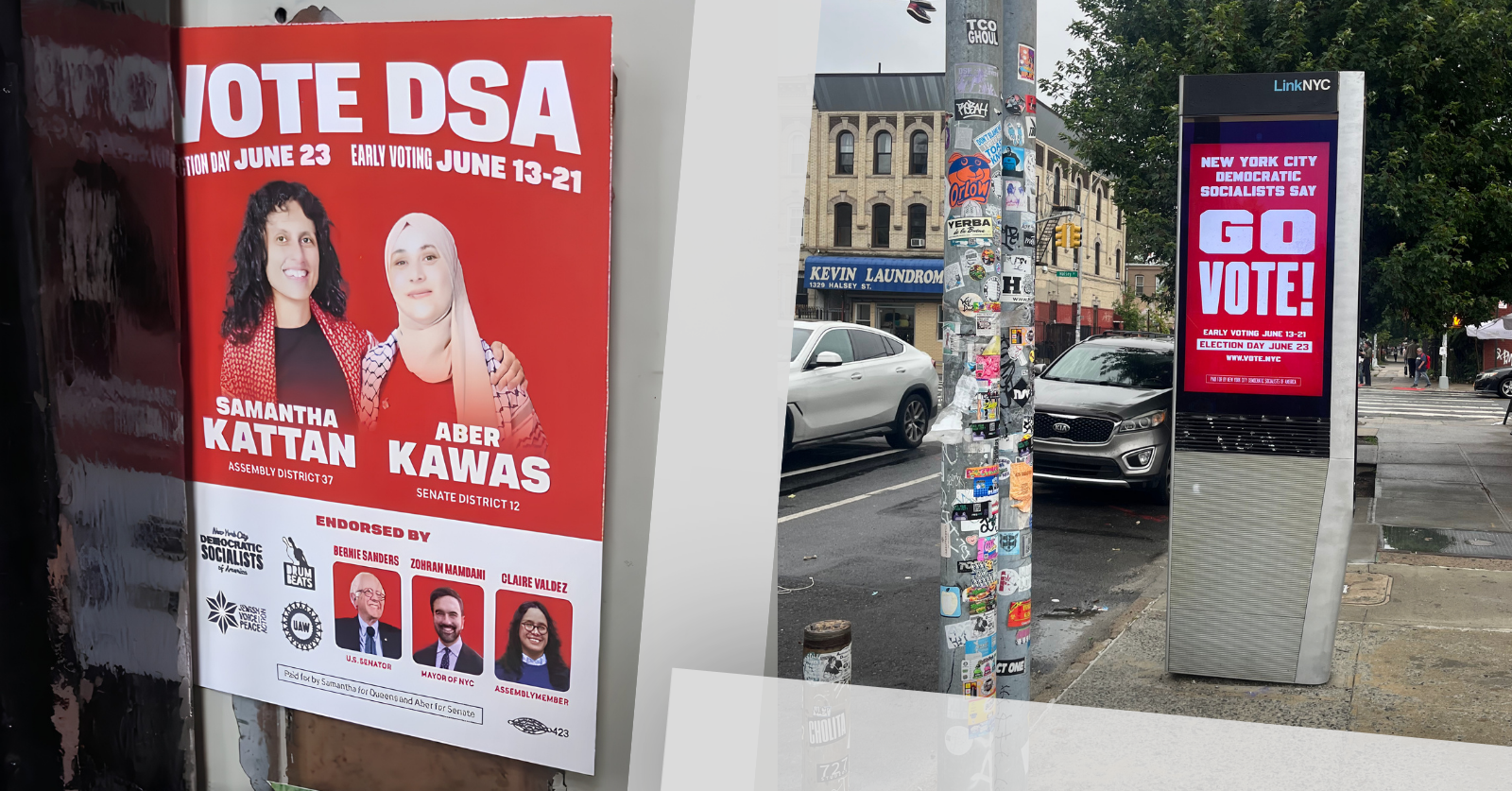
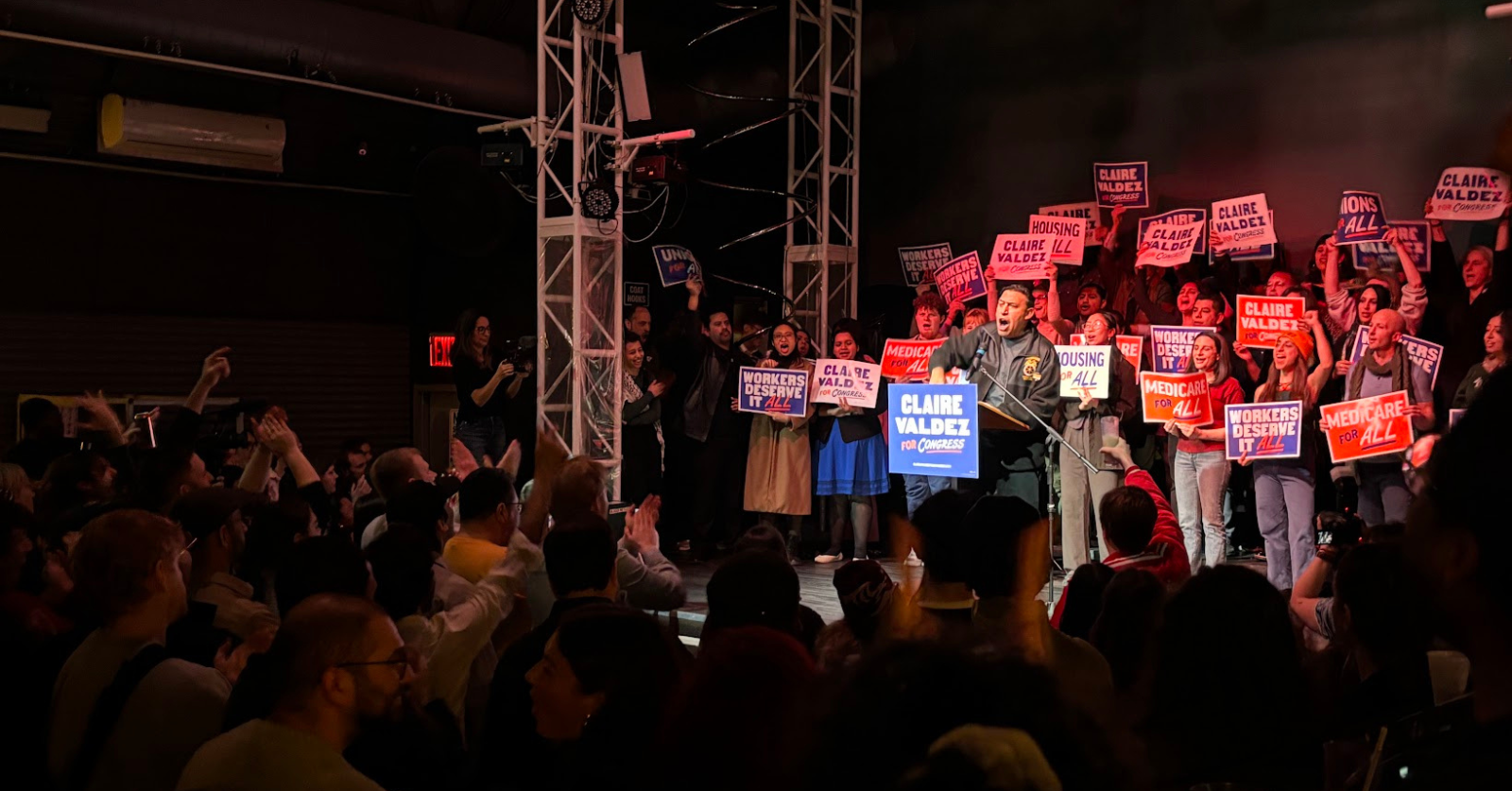
The 120th Congressional Session poses a new opportunity to go beyond the informality of the Squad: a real Democratic Socialist bloc in Congress with a shared program and more closely coordinated approach. The elections of Chris Rabb, Claire Valdez, Darializa Avila Chevalier, Melat Kiros, and most recently Donavan McKinney, translated super-majoritarian support for democratic socialist demands like Medicare for All, Abolishing ICE, and enacting an arms embargo on Israel to real electoral victories, expanding Democratic Socialist representation in Congress from two to seven. Remaining in this cycle is Oliver Larkin, DSA cadre running in Florida who recently went viral for bringing up Trump and the Epstein files on Fox News, and who is facing hundreds of thousands in corporate PAC money.
Unlike the Squad’s informality, these DSA candidates have been endorsed (some just locally, some by their chapter and the national organization) and supported by a far larger, organized, and more party-like DSA. Their endorsements by large numbers of comrades in their districts and across the country came with an expectation of collective and democratic coordination and collaboration. Despite being elected on the Democratic Party ballot line, our new representatives can act as the closest thing to an alternative, Democratic Socialist political party in Congress. Acting as a serious independent bloc in Congress, not just as a faction inside of the Democratic Party, will be essential to further establishing a socialist pole in national politics as a real alternative to both Republicans and Democrats.
The Race for Speaker of the House
If the U.S. had proportional representation like many other countries, our socialist candidates would have been elected on a Democratic Socialist ballot line, separate from the Democrats, and they’d form a separate caucus in the legislature from the Democrats. We would then have to make the tough decision whether or not to join a Democrat-led coalition government (if Democrats and Democratic Socialists together won a majority in congress), and on what basis. Elected leaders and members would negotiate our conditions.
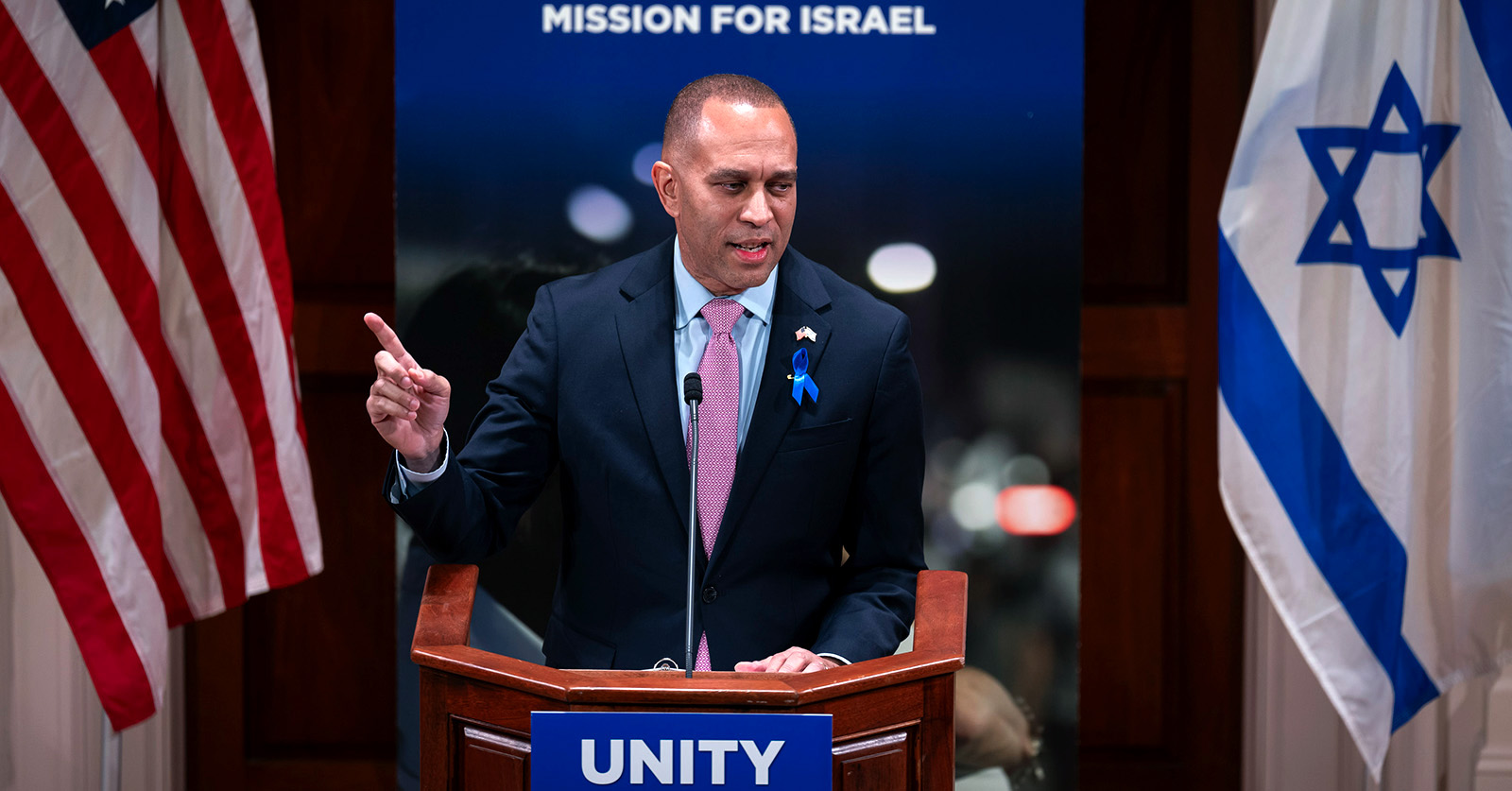
It’s a bit more complicated in the United States, where Democratic Socialists exist in the same party structure in Congress as politicians who ruthlessly represent corporate interests. If the Democratic Party wins a majority in November’s congressional elections, the question won’t be whether to form a coalition government or not, but whether to support Hakeem Jeffries for Speaker of the House. There are a number of ways to approach this question: voting blanket yes or blanket no for Jeffries, proposing alternative candidates, or publicly setting red lines that would determine a yes or no vote.
There are already differences on this question among the incoming and existing socialist bloc:
- AOC has pledged support for Jeffries, citing his support for public housing funding;
- Valdez, Avila Chevalier, and Rabb, have indicated some form of strategic ambiguity, refusing to say yes or no yet;
- Larkin told Axios he wouldn’t vote for Jeffries while Kiros stated that she will “not vote for any Democrat for a leadership position if they take corporate PAC money.” She has also put forward the most sensible approach for Democratic Socialists and allied members of Congress:
“If enough of us share that commitment to Medicare for All, to ending corporate capture, to an arms embargo [on Israel], we should absolutely say: here are our conditions.”
The issues raised by Kiros are supermajoritarian positions in American society, and propelled our candidates to victory. Democratic Socialists should stand strong behind our popular program and refuse to run cover for corporate politicians and genocidaires. Democratic Socialists should coordinate as a bloc and collectively withhold votes on a Democratic speaker unless specific demands are met. Kiros’s suggestions are good for our opening proposal: support for Medicare for All, no taking corporate PAC money, ending US military shipments to Israel. Our members of Congress should also include supporting the Melt ICE Act, along with hearings to investigate ICE/CBP/DHS’s human rights abuses.
Our members of Congress should also consider putting forward an alternative candidate to Jeffries who stands for these positions. Even though a Socialist candidate is likely to lose any such vote, it is still a useful endeavor to promote alternative leadership to the corporate Democrats, and use the withdrawal of their candidacy as a bargaining chip. Socialists in Congress should rally public support for their efforts through the mass movements that helped get them elected, keeping us active in the streets and in our unions, while they negotiate with the Democrats, taking an open bargaining approach. DSA members and the broader public can help build external pressure on establishment Democrats.
Our members of Congress must be willing to ultimately vote no on any candidacy if certain conditions aren’t met, or else waste bargaining power. Similarly, we should be willing to vote yes if all our conditions are met, and also be open to a yes vote if only some of our conditions are met, if, and only if, democratically approved by the movements that put them in office. Whatever choice is made should be made in direct conversation and collaboration with DSA through the Federal Socialists in Office Committee (more about this later). Moving past the era of the Squad means no longer deferring these decisions to the machinations of individuals, instead relying on collective democracy and movement power to chart the right path.
Whatever the conclusion of our bargaining, we should tell no lies, and claim no easy victories. A partial victory should be framed as such, attributing the victory part to the power of our movement and working people and the partial part to the power of capital and corporate politicians, recognizing that a full victory will require socialists and the working class to build even more power. We should in no way attribute our movement’s wins to corporate Democrats.
A Socialist Caucus?
How our democratic socialist bloc should organize and present itself is another important question. DSA’s National Political Committee (NPC) recently established a Federal Socialists in Office Committee (FSIO) with the goal of coordinating our federal bloc.
All of the Democratic Socialists in Congress should work together, so our FSIO Committee should invite the New York City chapter’s Congresspeople to join since they would have easily passed votes to endorse by the National Electoral Committee membership and the National Political Committee. Bringing together all our DSA Congressmembers will strengthen our organization’s ability to develop with them a shared plan of action.
This also means that NPC members should spend a lot more time thinking about national politics and working with our members of Congress. If our movement can provide our representatives with actionable guidance that advances our shared goals — informed by the accumulated experience of now nearly a decade of electing hundreds of socialists — we can turn our organization towards the millions of Americans looking for a political alternative at the exact moment when our membership is surging and the right-wing is naively fearmongering and further highlighting our ideas.
In addition to the FSIO, there are a number of other questions about how best our socialist members of Congress should organize themselves. Should they form a Democratic Socialist Caucus in Congress? Should they join the Congressional Progressive Caucus (CPC)? I think they should do both, adopting a nesting-doll approach to Congressional politics, simultaneously presenting as a clear socialist bloc with devoted shared staff resources and participating and intervening alongside progressives in Congress.
It is almost certain that they’ll join the Progressive Caucus, which is welcome, but this moment calls for more than that. Having a separate Democratic Socialist Caucus will help project DSA as a party-like organization, present socialism as a clear alternative to capitalism, and raise our organizational and political profile. Similar to the CPC, the Democratic Socialist Caucus can put out joint statements, have their own devoted social media pages, and pool resources for shared staff to help with day-to-day coordination. Our contingent in Congress should similarly vote as a bloc and deliver a DSA response to the State of the Union.
Forming a formal Socialist Caucus, or de facto acting as one, wouldn’t preclude us maintaining good relationships with other progressives like Ilhan Omar and Summer Lee and collaborating with them on various issues. But a Socialist Caucus is necessary if we understand the audience for our action in Congress to be the millions of US Americans outside of Congress, not just other left-wing politicians inside of it. If the recent elections prove anything, it’s that voters are hungry for a new kind of Democratic Socialist politics, not just progressivism.
A Socialist Program
Importantly, DSA is more than just our electeds who are but one part of our broader strategy for socialism. Last week, DSA launched our Workers Deserve More Program for 2026-2027. The program has already been picked up by right-wing media, providing us with free advertising by fearmongering about our demands like a 32-hour workweek and abolishing the Senate.
It’s an important step toward becoming a party that we have a coherent program we can be proud of, and that we can center in all facets of our work. It will be essential that our socialists in Congress collaborate with us to promote Workers Deserve More — the demands within, and the literal document itself — and engrain in people’s minds that they are not simply individual organizers, but de facto spokespeople for our program and organization.
The various demands in Workers Deserve More provide a good framework for the kinds of fights that our members of Congress should take on. These fights should be used to rally and organize people outside of Congress, and force corporate politicians of both parties on the defensive. More than that, though, the document taken as a whole proposes a democratic socialist alternative where the working-class majority holds political and economic power and democratically directs our social surplus toward social need and human flourishing. Educating the populace on this vision will be a core task of our socialists in Congress.
Campaigning on our core issues and popularizing Workers Deserve More nationwide will lay the foundations for DSA’s 2028 electoral campaigns up and down the ballot, from city councils to President. For our socialists in Congress, James Connolly’s words should be their mantra: “Our demands most moderate are, we only want the earth.”