
More than one hundred million people will go to the polls in October to choose Brazil’s next president and determine control of that country’s Congress. It’s a battle with eerie similarities to the 2024 presidential election here: a candidate of the far right, mounting a right-wing “populist” campaign and marred by corruption charges, is attempting a comeback for the right after its defeat in the previous election. The comparison extends further too: the outgoing right-wing administration of Jair Bolsonaro tried to carry out a (very botched) coup after losing in 2022. This time, Jair Bolsonaro won’t be on the ballot — unlike in the U.S., Brazil’s Supreme Court has forbidden the coup-plotter to run for reelection, and he currently lives in exile (in Miami, naturally) — but he has handed off the role of standard-bearer of the right to his son, Flávio.
Of course, the hope of the left in Brazil and here is that the similarities will end there, and that Bolsonaro and his gang will go down to defeat. Facing off against Bolsonaro is Lula from the Workers Party (the Partido dos Trabalhadores, the PT), as he runs for his fourth term. Lula has the support of most other parties on the left, the major unions, and social movements. Among his supporters are the activists of the Socialism and Liberty Party (Partido Socialismo e Liberdade, or PSOL).
In this interview with two activists from PSOL, Pedro Fuentes and Peter B., they give us the lay of the land. They also share how their tendency within PSOL, the Socialist Left Movement (Movimento Esquerda Socialista, MES), is growing.
The Call: The election is happening as Donald Trump and Marco Rubio are pushing forward a much more aggressive attempt to place Latin America under U.S. domination. How is this shaping the election campaign?
Pedro Fuentes: There is a clear rise in political aggressiveness in the Trump era. Trump feels strengthened after tightening control over Venezuela and following recent electoral victories for the right in Colombia, Peru, and Argentina with Javier Milei. Yet this assertiveness is undermined by his growing geopolitical weakness and his domestic weakness in the United States.
Trump’s foreign policy has faced serious setbacks: he failed to impose his will in the Middle East despite the devastating war in Gaza, he has become bogged down in the war on Iran, he has lost influence among Arab countries, and all of his actions in the region have contributed to rising oil prices and global economic instability. He has had to retreat from an initially aggressive posture against China, while Canada is moving closer to the European Union.
Unable to secure victories elsewhere, the Trump administration has intensified direct political and economic intervention in the region south of the Rio Grande — its “Western Hemisphere.” Washington seeks to reaffirm its ability to impose an authoritarian, neocolonial order by curbing China’s influence and pressuring governments that resist direct control, including Mexico, Canada, and Brazil.
In this context, Brazil’s election becomes strategically significant. The vote has the feel of a referendum: a Bolsonaro victory would be a vote to strengthen U.S. influence in Brazil, while a victory for Lula would maintain Brazil’s relative autonomy and balanced position between China and the United States. The race remains tight, and either outcome is possible.
The broader balance of forces in Latin America has still not lurched to the right entirely, however. Electoral victories of the far right have been narrow, and what will ultimately shape Brazil’s future is social mobilization, not just the election result. Regardless of who wins, the country faces major social and economic challenges: extreme capital concentration in the hands of the rich and big corporations, rising poverty, deteriorating living conditions, and increasingly destructive climate‑related disasters. Our forecast is that we will live through years of great social mobilizations as are already happening in Argentina, Chile, and Bolivia.
The Call: How does the ruling class in Brazil view Lula and Bolsonaro? What are they most concerned about as they look at the election?
Pedro Fuentes: Brazil’s bourgeoisie, like any bourgeoisie in the world, is far from homogeneous. A significant portion of the business elite initially sought a “third way,” rejecting both Bolsonaro and Lula, but that project failed. The country is now fully polarized between Bolsonaro’s neofascist camp and Lula.
Bolsonaro enjoys strong support from the agribusiness sector, which carries enormous weight in Brazil’s economy. This sector relies heavily on genetically modified seeds and environmentally destructive herbicides and is expanding the agricultural frontier through the deforestation of the Amazon. Bolsonaro’s climate change denialism and anti‑science stance make him their ideal candidate. He also has backing from industrial and food‑processing sectors, such as coffee exporters, whose markets are oriented toward the United States.
It would be a mistake, however, to assume Lula lacks bourgeois support. His vice president is Geraldo Alckmin, who enjoys the backing of segments of São Paulo’s industrial bourgeoisie, which reflects their inclusion in Lula’s coalition. They suffer from competition with Chinese imports and other foreign producers. Most importantly, Lula has received consistent support from financial capital. Across his three previous administrations, banks benefited enormously, and Brazil today has some of the highest interest rates in the world. Financial profits have been exorbitant compared to other sectors, making finance a key pillar of Lula’s bourgeois backing.
The Call: In the last few weeks, a major corruption scandal has hurt Lula’s reelection chances. Lula and Bolsonaro are now tied in the polls. What happened?
Pedro Fuentes: Yes, the race is now a tie. The crisis reached a new peak last week with an unprecedented breakdown inside the Supreme Federal Court (STF), the country’s highest judicial authority. Until now, the STF had played a key role in prosecuting the coup attempt and sending Jair Bolsonaro to prison. But a session last week — broadcast live for more than ten hours — turned into a public confrontation between two factions of the Court and ended without a decision. Four justices defended Alexandre de Moraes [who has been one of the justices most critical of Bolsonaro], while four aligned with Justice Nunes Marques, who has defended Bolsonaro.
Two points are important for readers in the United States. Daniel Vorcaro, the banker at the center of the scandal, built his fortune through a Ponzi scheme similar to Bernie Madoff’s. He bought influence across the political system, from numerous deputies, at least four STF justices — including Alexandre de Moraes — and governors. They invested public pension funds in his bank, generating enormous profits.
The two big cases currently under review involve, first, Alexandre de Moraes, whose wife’s law firm received millions of [Brazilian] reals from Vorcaro. Investigators have identified 53 phone calls between the banker and the justice. The second case concerns more than 60 million reals transferred by Vorcaro at the request of Flávio Bolsonaro for a film about his father. The money’s destination remains unclear, but part of it appears to have financed the lavish lifestyle of Eduardo Bolsonaro [another son of Jair] in the United States.
At this specific moment, Lula is the most affected, since the crisis in the political system that this case represents is seen as a crisis for those who are currently governing. But Lula has no open judicial case, while Flávio Bolsonaro is accused by the STF of money laundering and criminal organization. Nevertheless, it is still Lula who has suffered principally from the corruption scandal.
The frustration and anger among the people of Brazil are sowing the seeds of an explosion. We in MES argue that a political revolution is necessary to transform the political regime. We put forward demands including the popular election of judges and eliminating the upper chamber of the Brazilian National Congress [like the U.S., Brazil has a Senate that strengthens the hand of the right].
The Call: What has been the PT’s response to the election becoming more competitive?
Peter B.: At first, the PT seemed to have been caught off guard. In fact, until just a few weeks ago, most of the party leadership was operating under the assumption that the election was relatively secure.
Now Lula is sharpening his attacks on the Bolsonaro family, which is essential. In speeches and social media posts, he has been reminding voters of the sheer brutality of Jair Bolsonaro’s government and encouraging them to think: if that is what it was like with the father, imagine what it would be like with the son.
Even so, we in MES still feel that the most important element is missing: a call to take to the streets and build a powerful popular mobilization to prevent the Bolsonaro family from returning to power. That can only be achieved through a combination of a hard-hitting message on social media and television and real mobilizations on the ground. At the same time, the government needs to move forward with popular measures that are still within its power to implement.
The Call: PSOL is supporting Lula in this election, instead of running its own presidential candidate. What are the most important points of unity with the PT?
Peter B.: The main point, and the fundamental reason for this unity, is to prevent the state apparatus from falling back into the hands of neo-fascists, this time in an alliance with U.S. imperialism. In that sense, our unity is above all a unity against the Bolsonaros.
Within that framework, we also agree on defending basic standards of national sovereignty and preserving and expanding working-class rights. In the immediate term, ending the six-day workweek, the so-called “6×1 schedule,” is one of those issues.
It is fair to say that the PT and PSOL still have strategic and programmatic differences. But in this election, we are seeking to prioritize joint action around a small number of very clear issues that can mobilize society to defeat neo-fascism.
The Call: From the point of view of PSOL and especially MES, what are your biggest points of difference with Lula’s most recent administration (2023-present)?
Peter B.: The most fundamental one is economic. Lula’s third administration has pursued a deeply contractionary fiscal policy designed primarily to satisfy Brazilian and international capital, especially financial and rentier interests. It is known as the Fiscal Framework (Arcabouço Fiscal). PSOL lawmakers voted against it and publicly explained why.
This is a fundamental disagreement, because it is precisely as a result of this misguided economic policy that there is not enough funding for public healthcare, public education, and a wide range of social programs. We therefore have a contradictory situation: Lula often speaks in favor of these rights, but his government does not actually invest heavily enough in them. This is also one of the factors behind the social discontent we are seeing during the election period, which in turn strengthens the opposition to the government.
PSOL also criticizes the broader development model represented by “Lulismo,” particularly when it comes to environmental issues. Today, for example, Lula supports and is moving forward with oil exploration near the mouth of the Amazon River. PSOL opposes this.
We believe the Brazilian economy remains dependent on financial interests and on multiple imperial powers, preventing both genuine national development and social justice. When Lula talks about promoting development and social justice, we believe he tends to prioritize approaches that don’t go far enough to address the deeper needs of the working class.
Finally, PSOL also criticizes the PT over the need for renewal on the left: renewal of its leadership, its politics, its communication, and the social forces at the forefront of struggle. Today, therefore, we recognize Lula as a bulwark against the far right. But if we want to address the underlying conditions that give rise to neo-fascism, we also need to go beyond Lula.
The Call: There is a real challenge here. How do you go about supporting the PT while continuing to put forward a left-wing alternative to it?
Pedro Fuentes: There is an important clarification to make regarding how we combine voting for Lula with maintaining full political independence. In several states, the PT is not running its own gubernatorial candidates because it is supporting the candidates of bourgeois parties. In those cases, we vote for Lula for president, but we support our own candidates for governor. And we run our own candidates for the Senate, and for national and state legislatures. Across the country, our candidates run independent campaigns with their own program and identity.
MES candidates in particular defend a more radical program than Lula’s. One example is the fight against the 6×1 work‑schedule system — a struggle originally launched by PSOL and now also supported by Lula. We advocate for a 5×2 system, which would significantly improve workers’ lives [like the traditional U.S. work schedule: five days of work, two days off]. We also defend national sovereignty and a stronger confrontation with imperialism, higher taxation on the wealthy, agrarian and urban reform, and an ecosocialist perspective. These positions clearly differentiate us from the PT and reaffirm our political independence, even when we share a tactical vote to stop the advance of the neofascist right.
The Call: Is PSOL growing in this moment?
Pedro Fuentes: Yes, PSOL is growing significantly. The PT is worn down after many years in government and as part of a political system that has failed to address Brazil’s structural problems. A revealing trend has emerged: many voters choose Lula for president but cast their congressional vote for PSOL candidates. This pattern is visible across several states. For example, Fernanda Melchionna is likely to receive the most votes among left-wing candidates in Rio Grande do Sul, and Sâmia Bomfim is expected to receive a strong vote in São Paulo [both are candidates from MES].
This growth is not only due to PSOL’s central role in the fight against the 6×1 work‑schedule, but also because it remains closely connected to social struggles. It is practically the only party with no ties whatsoever to the Vorcaro corruption scandal. That further strengthens its credibility among sectors seeking an alternative to the traditional political system.
The Call: What are the prospects for PSOL in the congressional elections? And for MES?
Peter B.: In 2022, PSOL elected 12 members of Congress. This time, we believe we can increase that number to around 16. Together with the Sustainability Network (“Rede Sustentabilidade,” REDE), which PSOL is aligned with as part of a broader party federation, we could come close to 20 seats, or roughly four percent of Congress.
MES is an important part of that growth. In addition to reelecting our current representatives, Sâmia Bomfim and Fernanda Melchionna, we are also seeking to elect Fábio Felix in the Federal District and Roberto Robaina in Rio Grande do Sul.
Even more importantly, together with other groups, MES has been building what we call a “Radical Left Caucus” inside PSOL, which could include or influence roughly half of the party’s future congressional delegation. The exact numbers are still very much up in the air.
Beyond the electoral results themselves, something we value greatly is the opportunity the campaign gives us to carry out mass political agitation, politicize broader sections of the population, and bring new activists into PSOL and MES. We have been making progress on that front. In São Paulo alone, through Sâmia’s campaign, for example, we held a meeting in early September for people interested in joining PSOL that brought together 80 new people.
The Call: Sâmia Bomfim’s campaign is especially strong this year. Can you tell us more about that?
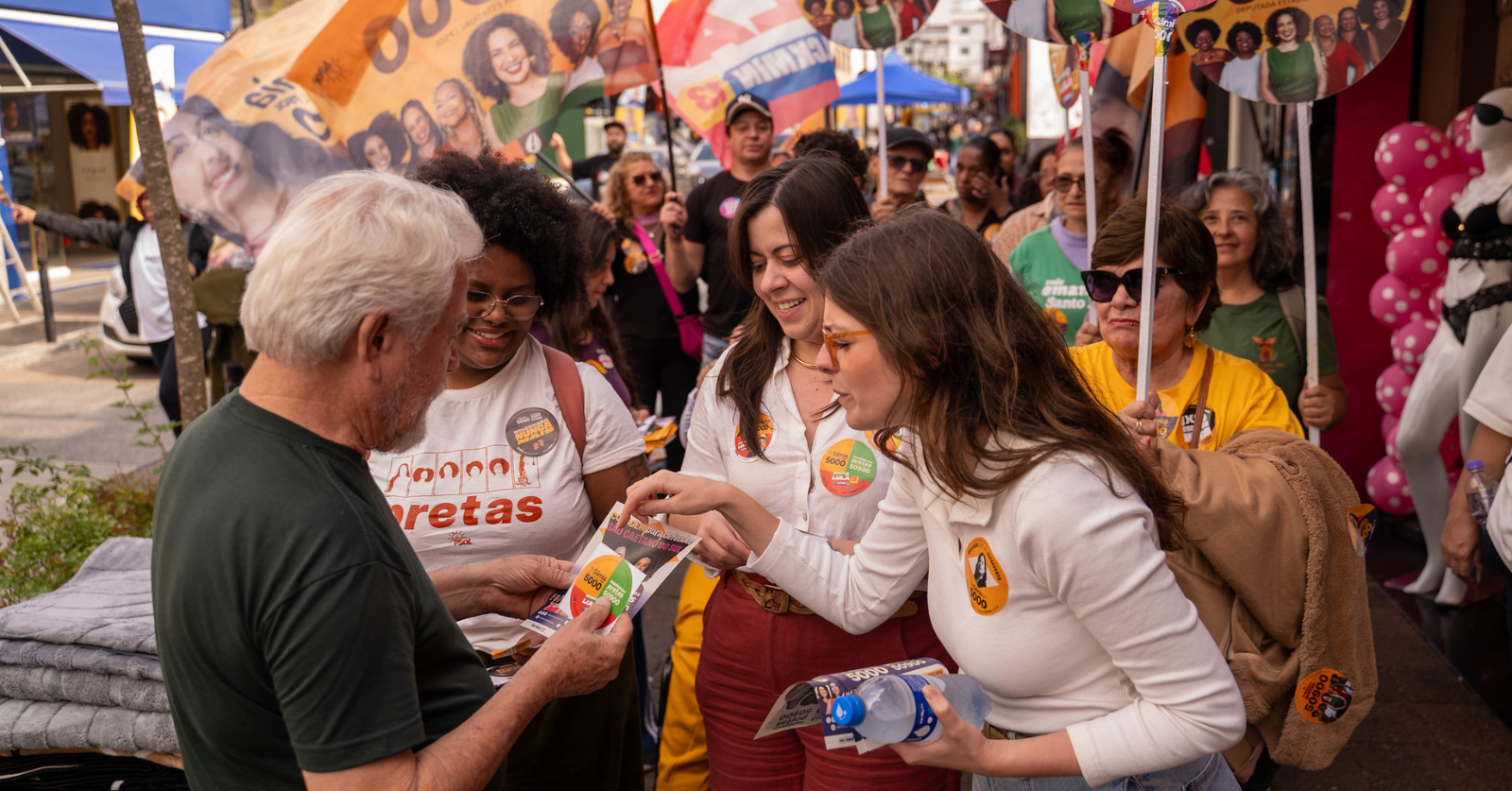
Peter B.: More important than being a member of Congress, Sâmia is first and foremost an activist and a leader of both MES and PSOL. She is certainly one of the five most influential figures on the Brazilian left in the National Congress today. That makes her, in my view, one of the country’s most important political leaders.
She is still relatively young, at 37. She’s a feminist, a mother, a public-sector worker with a background in the labor movement, and a courageous fighter against the far right. This will be her third campaign for the Chamber of Deputies, and the level of mobilization has been strong.
She is among the ten congressional candidates nationwide who have raised the most money through grassroots donations. We have thousands of people registered through our website to receive campaign materials, hand out literature with us, and engage with the campaign on social media. We have also organized lots of PSOL activists around the campaign.
Together with hundreds of activists, Sâmia has developed a campaign platform of more than 100 pages covering dozens of policy areas, as part of an effort to set an example of what a genuinely political and programmatic campaign can look like.
Once again, our expectation is that she will receive more than 200,000 votes in the state of São Paulo.
The Call: Is there a lesson in this campaign that we in DSA can learn as we think about our tactics for the presidential election in two years?
Pedro Fuentes: There are many common points between the Brazilian and U.S. elections. In both cases, the central task is stopping the advance of the neofascist right — Bolsonaro in Brazil and Trump in the United States. And I would even say that the struggle in the U.S., both in the upcoming midterms and especially in 2028, is more decisive for Brazil and for the world as a whole than our own elections, because that is where the “devil,” the leading force of reaction, is located.
Some socialist comrades might ask: If both candidates represent bourgeois interests, why should we vote for one of them? Because they are not the same. Lula — and the Democratic candidate in 2028 — may govern in favor of the bourgeoisie, but they do so within a bourgeois democratic regime. This is not the political system socialists defend. We fight for a political revolution. But this regime still preserves certain democratic freedoms that make it easier for workers, immigrants, and oppressed sectors to organize and fight.
Voting in these cases does not imply we agree with the programs of candidates closer to the center than us. We do not support Lula’s program in government, and we say this openly even as we vote for him. But we are engaged in unity of action. In Brazil, we will vote to stop the neofascist fight, even while we maintain a clear political critique of the shortcomings of Lula’s administration.