
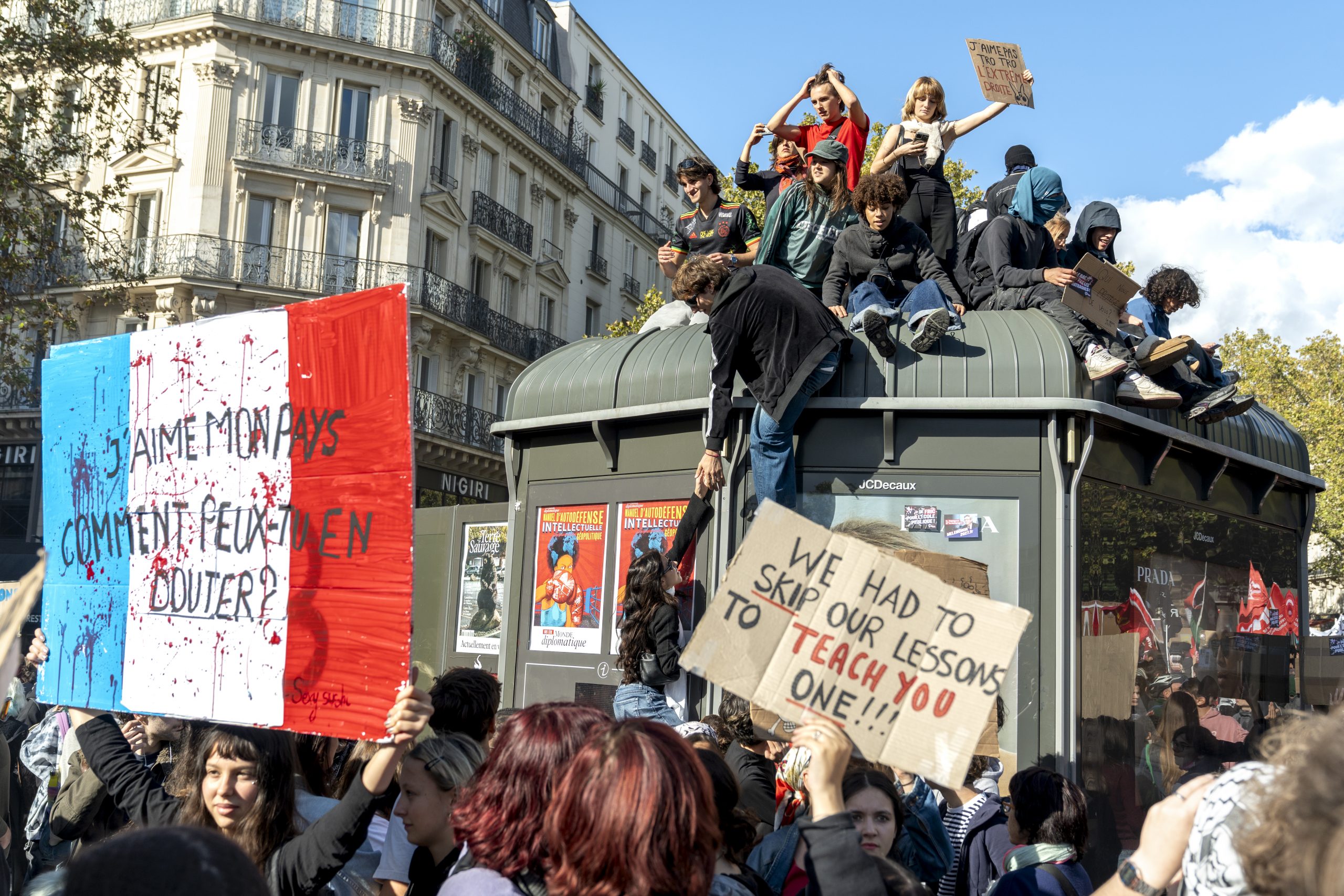
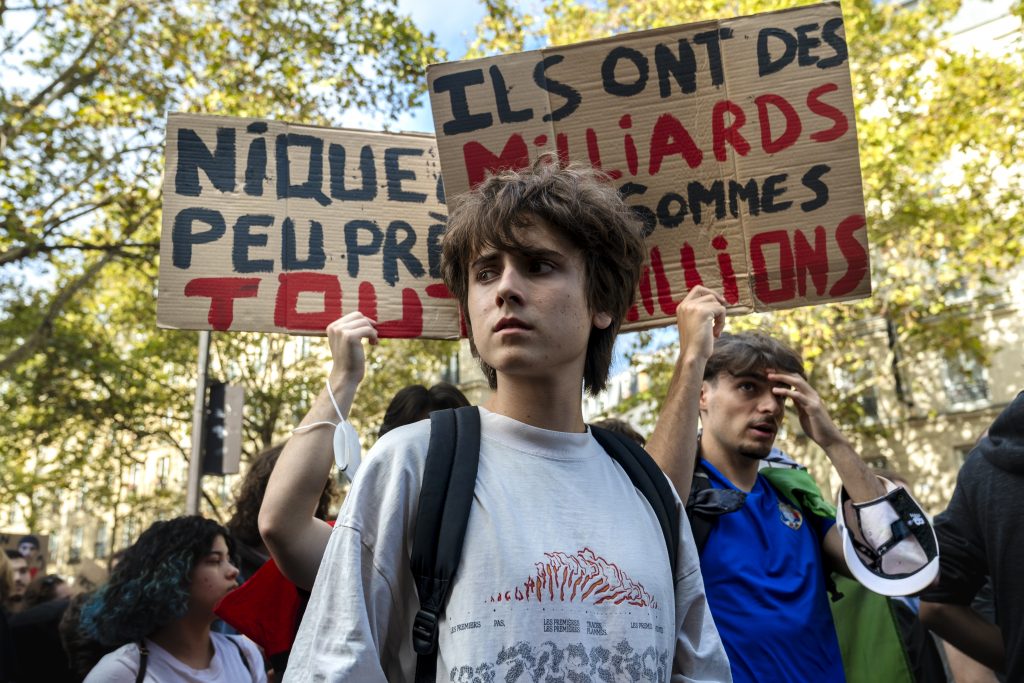
This week’s protest wave in France has all the hallmarks of a youth-led movement. A chaotic energy, an endearing irreverence for power, and a moral clarity that older counterparts often lack. The media seems intent on portraying these protests by focusing only on the first quality: chaos. Pundits are predictably mourning the lives of individual trash cans more than the lives of working-class students. Even as French riot police assault high schoolers with grenades and tear gas.
However, these protests can’t just be chalked up to youthful rage. The truth is that these students, much like American students, are being let down by the system. School days lasting from 8 to 6. Classrooms without teachers. Mold and asbestos in buildings. No school nurses. 35 students per class. At the heart of all these issues is the French government’s egregious neglect of education — a symptom of a system so corrupt that it cannot value its own children.
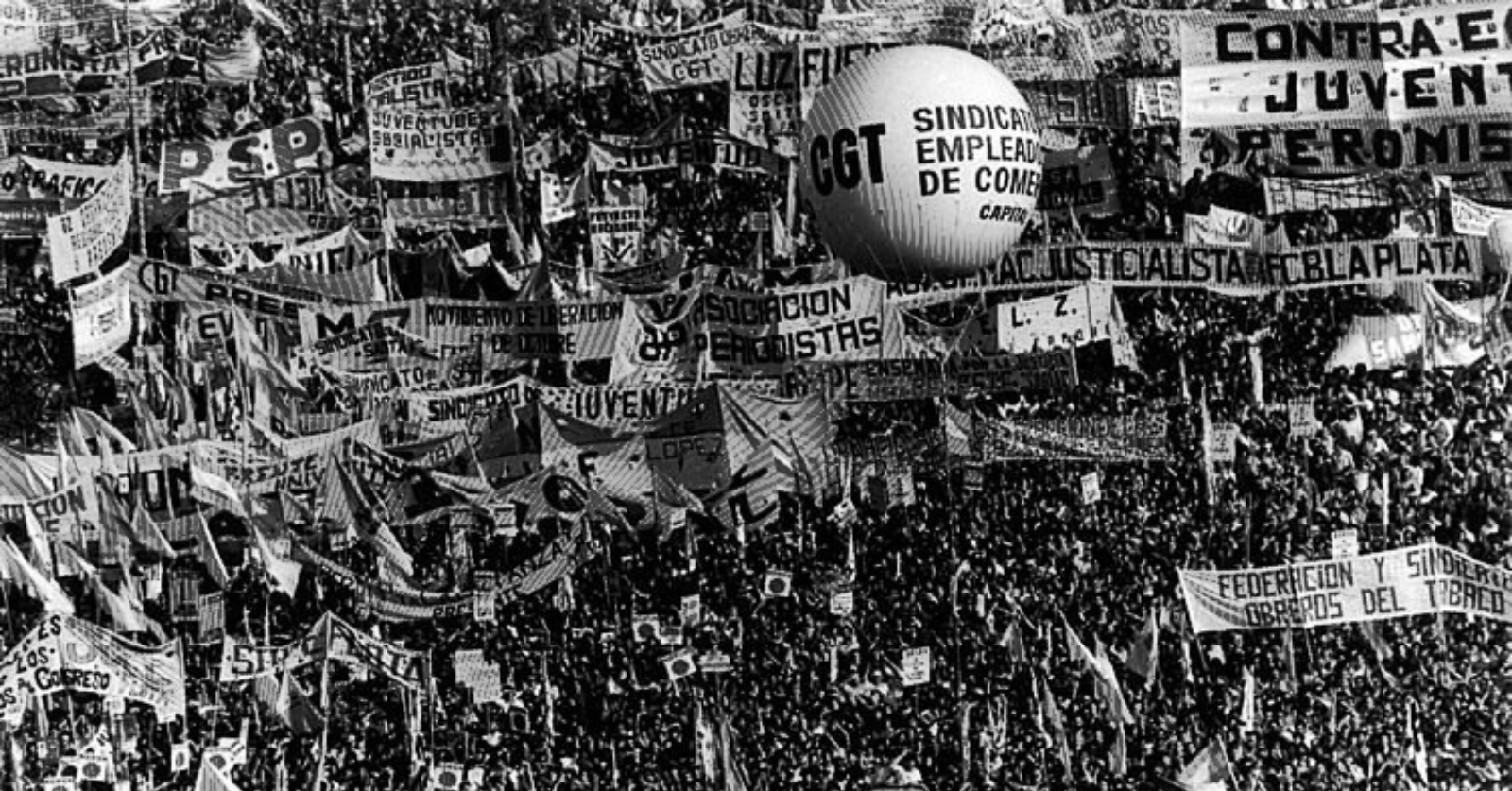
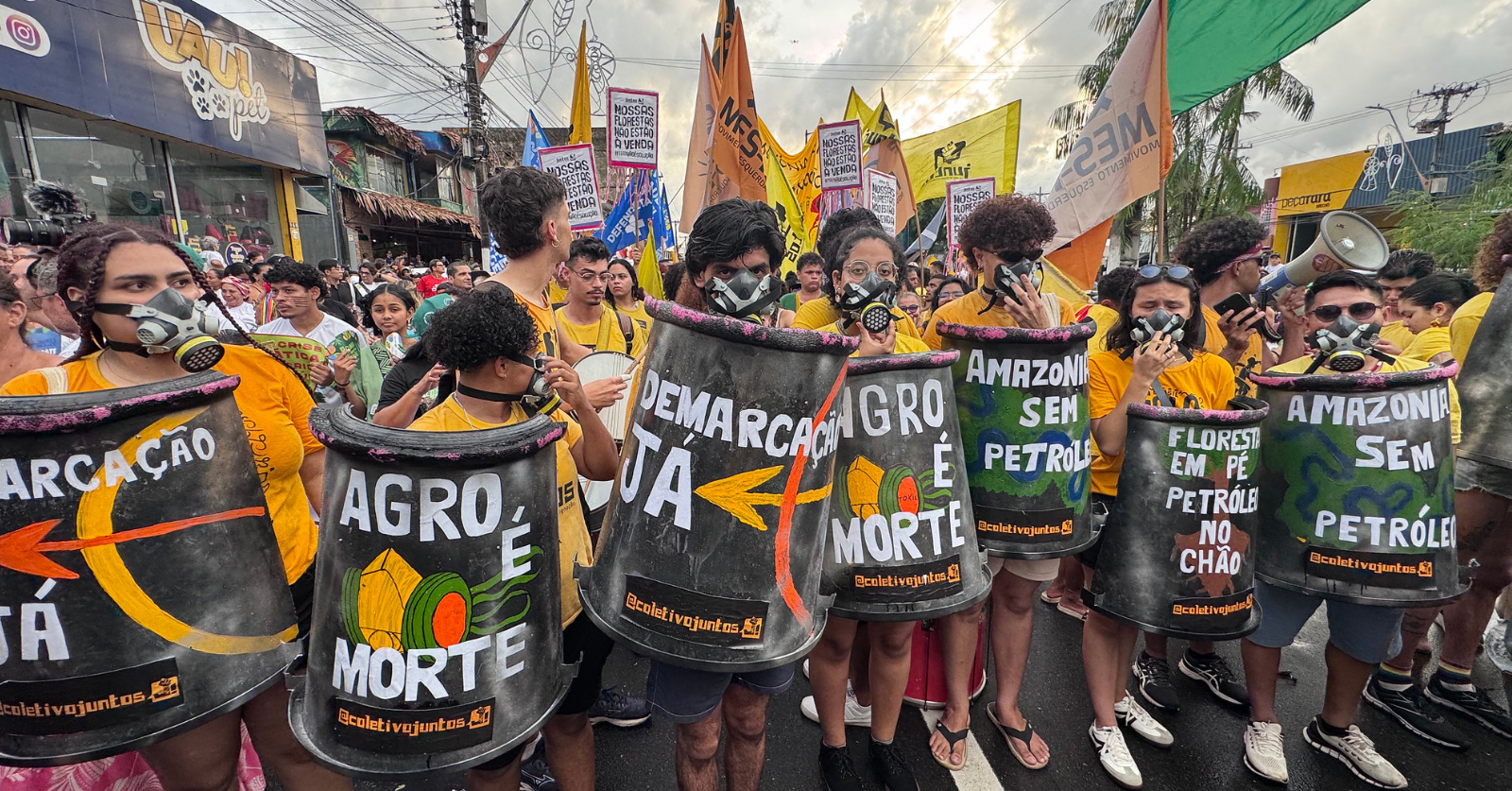
The French students are not an aberration, though. They are just another page in the story of the last half decade of Gen Z protests and revolutions. In the last three years alone, three different countries have had Gen Z-led revolutions: Nepal, Bangladesh, and Madagascar. Other countries have had protests so massive they brought the nation to a standstill, including India, Kenya, Morocco, Serbia, Bulgaria, Peru and Indonesia. These movements all tend to revolve around the same issue, expressed in various forms: the neglect of the country’s youth by a corrupt, geriatric elite— a pattern not alien to us, either. In understanding the French crisis, we can better understand these countries along with our own.
What underpins the French crisis?
To understand why the French government would rather beat its own kids to a pulp rather than spend more on education, you have to understand one concept: debt. For those uninitiated, taxes do not make up enough to cover all of France’s spending, so they take loans (bonds) out from investors to cover the excesses in their budget, and they repay those loans over time. Every country on Earth does this, so debt in itself is not necessarily the problem. The issue is when a country’s debt gets so massive that repaying it becomes a tall task. So, if you’re an investor who wants to ensure the French government will reliably pay you back for years to come, and they’re already trillions of dollars in debt, you don’t want them foolishly spending boatloads of money on public school students (who don’t really need it anyway, right?). Because if they’re spending more money on those students, how can you be sure that the same government will have enough left for you? Bondholders leverage their declining confidence in governments’ ability to repay them by demanding higher interest rates: “If you’re gonna spend more money on them, you have to make it worth it for us.” This is why France now has the highest interest rates in Europe, nearing 5%.
The debt issue has become particularly profound in recent years. France’s current debt rounds up to $3.6 trillion. In 2026, France projected itself to spend more money on paying off its debts than on its entire education system: €65 billion. And in 2027, debt payments are expected to soar beyond €90 billion. The key issue is that, on a yearly basis, France spends 5% more than they earn through state revenues. So to cover what they can’t recoup in tax revenue, they continue taking out bonds. French Prime Minister Sébastien Lecornu responded to this growing issue with a budget proposal last week, which includes freezing public-sector wages, increasing consumption taxes, and also, somehow, cutting corporate taxes. On the back of these protests, IMF Chief Kristalina Georgieva has continued urging France, “Get your house in order.” If you don’t speak investor, that means, “Spend less money!” It’s no wonder Lecornu is so hesitant to spend more on schools.
Where are we now?
On the back of the last wave of blockades and protests on October 6, the French Prime Minister cancelled the next week of high school classes across the country, rebuking the violence around these protests. Conservative and liberal commentators have also denounced these protests as not about education at all. Earlier this week in The Atlantic, Thomas Chatterton Williams decried how “the violence fanning out across France has little to do with pedagogical concerns,” calling the protests “an exercise in nihilistic resentment.” What Williams sorely misses is where this nihilism comes from. Imagine you are a student in the working-class suburbs of Paris. You start the school year, literally without a teacher in one of your classes. You walk into classrooms that don’t have chairs for you to sit in. Classrooms are so hot you can barely think. If you get injured, the line for the school nurse goes out the door. You see that the country doesn’t take your education seriously, so why should you?
What is profound is that instead of giving into such nihilism, students are opting to fight. The adults in the room have proven incompetent and uncaring. It would make sense for the youth to disengage from school and build a life that is not contingent on the political courage of French bureaucrats, to simply accept they will never receive the education they need. Yet, they are insistent on asserting control over a French government that is being held hostage by bondholders and investors. One French high schooler clarified, “Our protests … are not the sign of an uncontrollable teenage crisis, but of anger that has been suppressed far too long in the face of an indifference that has been normalized and systematized.”
For all the handwringing by French politicians, these students see the truth at its most naked: the underfunding of French education is not a technocratic issue, it’s a values issue. It’s about a French government that is more preoccupied with satisfying investors than its own children. Prime Minister Lecornu has repeatedly denounced the chaos incited by French high schoolers (never mind the gangs of riot police attacking high schoolers without provocation). Yet, this is a chaos that has been homegrown, within the laboratory of the French state. If you treat the lives of students unseriously, don’t be surprised when they, in turn, treat your property and institutions as unserious.
In understanding the French crisis, we can understand the crisis underpinning governments all around the world. Massive debt payments, investors that won’t give up an inch, and the unwillingness of political elites to confront them. Why would Emmanuel Macron pull capital from the aristocrats who backed him to fund the education system? And even if he tried, how would he obtain the funding for public education without spooking the bondholders who want to ensure their repayment? This is a difficult question — one that even a left-wing government would struggle to provide answers for. However, there is one thing for certain: a mass movement of high school students is part of the solution, not the problem.
A trend, not an aberration
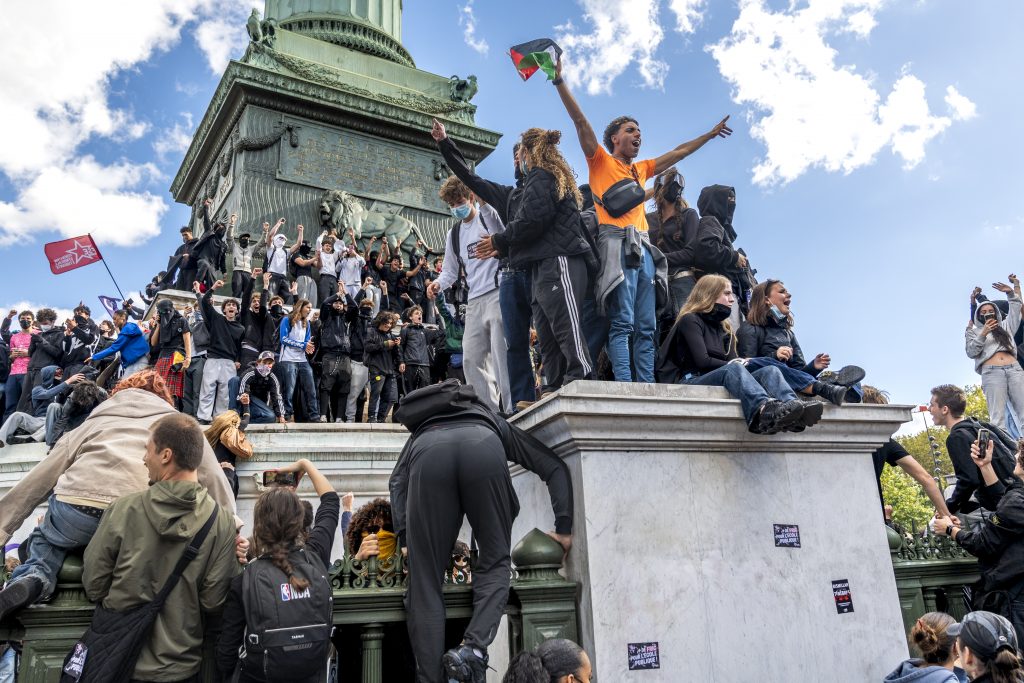
The last week cannot be seen as a sudden break. What is happening in French schools has been mirrored in country after country in the last couple years: the younger generation is refusing to sit by and watch. It was only two years ago when Bangladeshi students forced long-time dictator Sheikh Hasina to flee the country by helicopter. Since then, two more Gen Z–led revolutions have happened, both in 2025. In Nepal, young people revolted against record-high unemployment, government nepotism, and a ridiculous social media ban by storming their parliament and throwing the politicians out. One viral video showed a government minister being flogged in the rivers surrounding the Parliament. Another showed a minister hiding in his room behind a blockaded door while protestors attempted to force their way in. In Madagascar, another revolution occurred after repeated power outages sparked mass protests. Madagascar’s population is especially young (half the country is under 20 years old), so the combined sting of power outages, water outages, and high youth unemployment became an unstoppable powder keg. After weeks of street protests, the movement finally culminated in a military coup, dethroning the sitting government.
The examples don’t end there. Hundreds of thousands of students in Serbia staged university blockades against the sitting government’s corruption, forcing long-time president Aleksandr Vučić to resign. Kenyan students stormed their parliament to stop them from raising taxes on the public. Indonesian Student Unions mobilized tens of thousands of students to protest government corruption and police brutality in Jakarta in the largest Indonesian protest movement since 1998. Young Bulgarians forced out their corrupt ruling government over an inflammatory budget bill. Each and every one of these protests follow a similar trend: the government puts themselves and investors before young people, prospects for young people diminish, and protests erupt. What is surprising is not that these student protests persist. It’s how seemingly oblivious the socialist left is to these youth-led movements.
DSA must pay attention
It feels as if we are all sleeping under a collective blanket, eyes shut. Did French students not shut down their entire education system in the last week? Did Nepalese, Bangladeshi, and Madagascar students not stage genuine revolutions within the last three years? Do the young people of India, Kenya, Morocco, Indonesia, and Serbia all not exist? If they do, what possible reason could we have as socialists for ignoring their movements so blatantly? In a period where we are practically on our knees, begging for a trace of hope to show us that ordinary people are willing to fight for a better future, should we not be looking at these examples as beacons of light, illuminating the way forward?
Some might argue that many of these youth-led movements were not categorically successful. Even the genuine revolutions didn’t bring about governments that sufficiently combat inequality. However, what is more important is the process: millions of people feeling that the political system and all its ills are something they can act on. In Serbia, crying mothers handled their children with tears in their eyes, yelling “Keep going! Keep going!” In Kenya, a student proclaimed, “Kenya has changed … the country is not asleep anymore.” As young people start moving, so do the workers and families around them. They realize that they too have a role to play.
The students of France and beyond are making ripple effects they could not have imagined. A week after the French blockades started, Belgian students and teachers have started blockading schools too. And back in France, teachers unions have announced a national strike for all education workers on October 13th, demanding $10 billion more for education in next year’s national budget. All the while, French students are keeping on: staring down riot police, tear gas, water cannons, yet refusing to back down. This is real courage, and we as socialists would do well to imitate it — the future we’re building requires it. We often speak in heroic terms. But when we risk it all on strike, when our boss threatens to put our family on the street, what keeps us from betraying our principles? I’d wager it looks something like the bravery of the students on the streets of Saint-Denis and Marseille.